AC Inspection 101: Why Your Bangkok Condo's Air Conditioner Matters
You’re from a place where air conditioning is a nice-to-have. In Bangkok, it’s life support.
That’s not exaggeration. Bangkok’s average temperature hovers around 29-35°C year-round, with humidity regularly exceeding 80% during rainy season. Your AC won’t just keep you comfortable—it will determine whether you sleep, whether you work productively, and whether your apartment develops mold.
Here’s what you need to know about AC before signing a lease.
Why AC Is Critical in Bangkok (Beyond Comfort)
It’s a Health Issue
In temperate climates, a broken AC means an uncomfortable few days until repair. In Bangkok, it means:
- Sleep deprivation: Trying to sleep in 30°C+ heat with 80% humidity isn’t just uncomfortable—it’s nearly impossible
- Productivity collapse: Working from home without AC means sweating through video calls and struggling to concentrate
- Mold growth: Without AC dehumidifying your space, mold can begin forming within 48-72 hours
- Heat-related illness: For those not acclimatized, extended periods without cooling pose genuine health risks
It’s a Financial Issue
AC problems are expensive:
- Minor repairs: ฿2,000-5,000
- Compressor replacement: ฿8,000-15,000
- Full unit replacement: ฿20,000-35,000+
If these issues arise after you’ve moved in, expect disputes about responsibility. Without documentation of the AC’s condition at move-in, you may find yourself paying for pre-existing problems.
It’s a Mold Issue
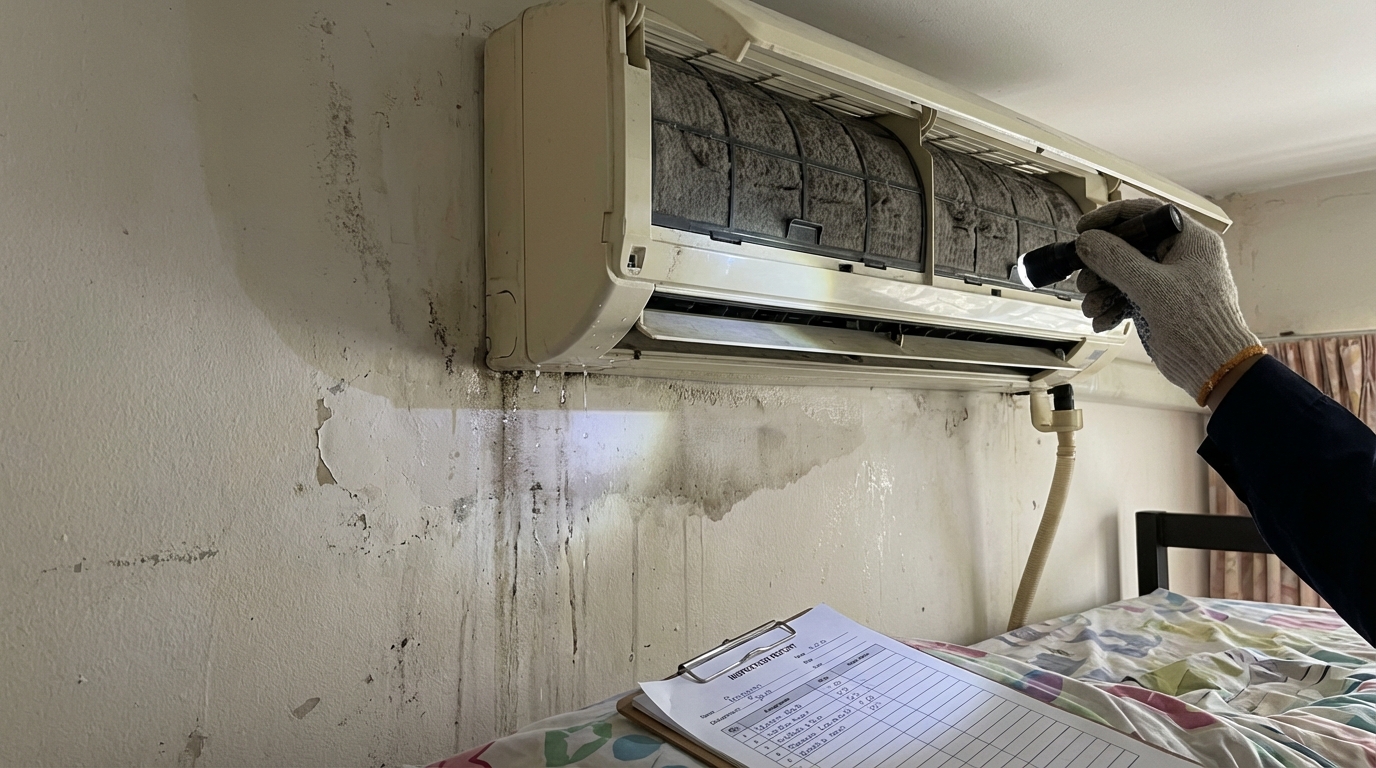
This deserves special emphasis. Bangkok’s humidity means mold is always waiting for an opportunity. A functioning AC does double duty: cooling the air and removing moisture. When an AC underperforms, moisture accumulates. Mold follows.
Within weeks of AC failure or underperformance, you may find mold:
- Growing on walls, especially corners and ceilings
- Inside closets and storage areas
- On furniture, especially fabrics
- Inside the AC unit itself
Mold remediation is expensive, time-consuming, and often comes out of your deposit.
Signs of AC Problems During a Viewing
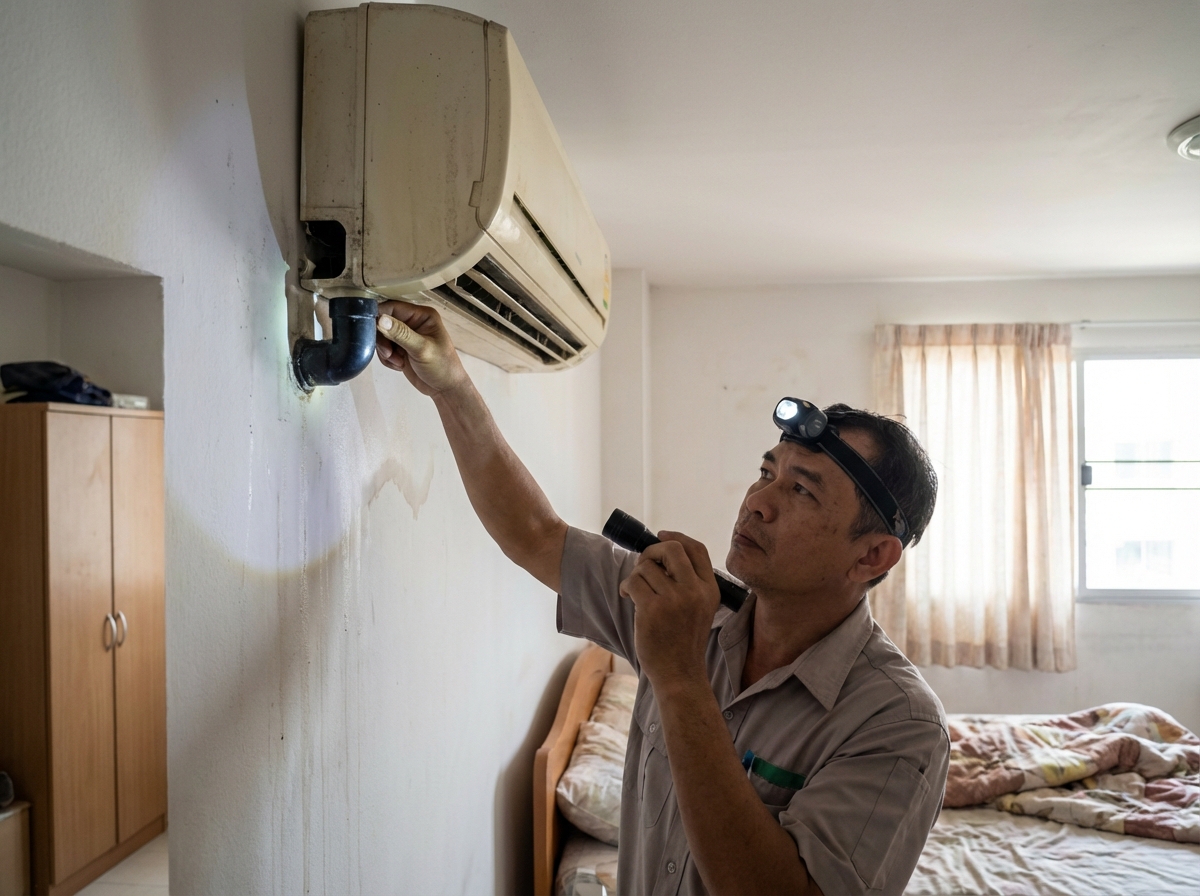
Most viewings give you 15-30 minutes—not enough time to fully assess AC performance. But you can catch obvious issues.
Immediate Red Flags
- Unit doesn’t turn on — Obvious, but sometimes explained away as “needs a reset”
- Unusual noises — Grinding, squealing, or rattling indicate mechanical issues
- Visible water pooling — Check around the unit and in the drain pan
- Musty smell when AC runs — Sign of mold inside the unit
- Ice formation — Visible frost on the unit indicates refrigerant or airflow problems
Performance Indicators
- Airflow strength — Hold your hand near the vent. Is the airflow strong and consistent?
- Temperature drop — After 10-15 minutes, the room should feel noticeably cooler
- Cycling patterns — Does the unit run continuously or cycle normally?
- Even cooling — Check different areas of the room for temperature consistency
Visual Inspection
- Cleanliness of filters — Ask to see the filter. Heavy dust buildup indicates neglected maintenance
- Condition of external unit — If accessible, check for damage or heavy debris accumulation
- Drain line — Where does condensation drain? Is the line clear?
- Age of unit — Older units (8+ years) are more prone to failures
The Drainage Issue: Bangkok’s Hidden AC Problem

Here’s something most newcomers don’t consider: AC units produce significant condensation. In Bangkok’s humidity, a unit can generate 1-2 liters of water per hour.
Where does this water go?
In well-designed systems, it drains away through a dedicated line. In poorly maintained units, it:
- Backs up into the drain pan and overflows
- Leaks into walls or ceilings
- Drains onto balconies, staining surfaces
- Pools behind the unit, causing mold and wall damage
What to check:
- Look for water stains on walls near AC units
- Check the balcony floor for discoloration below external units
- Ask where condensation drains and verify the path is clear
Why this matters for your deposit: Water damage from AC drainage is one of the most common deposit deduction items. Without documentation of pre-existing drainage issues, you may pay for damage that accumulated before you moved in.
Questions to Ask About AC Maintenance
Essential questions:
- “When was the AC last serviced?” — Professional cleaning every 6-12 months is standard
- “Who handles AC maintenance—the landlord or building?” — This affects response time
- “What happens if the AC needs repair?” — Who pays? How quickly does it happen?
- “How old is this unit?” — Units over 8 years old have significantly higher failure rates
- “Has the AC had any issues in the past year?” — Recurring problems often continue
What good answers look like:
- Specific dates for last service
- Clear maintenance responsibility
- Documented repair process
- Knowledge of unit age and history
Red flags:
- Vague or defensive responses
- “The previous tenant never complained” (not the same as “no issues”)
- Resistance to questions about maintenance history
AC Repair Costs vs. Inspection Cost
Let’s put this in perspective:
| Issue | Typical Cost |
|---|---|
| Basic service/cleaning | ฿500-1,000 |
| Refrigerant recharge | ฿1,500-3,000 |
| Fan motor replacement | ฿3,000-5,000 |
| Compressor repair | ฿8,000-15,000 |
| Full unit replacement | ฿20,000-35,000+ |

A Bangkok Inspect inspection costs US$499 / THB 15,900 for condos up to 120 sqm and includes thorough AC evaluation along with every other system in the unit.
The math: Catching a failing AC unit before you sign saves you from either paying repair costs, fighting with a landlord about responsibility, or living without AC while issues get resolved.
What Our Inspectors Check
When we inspect AC units, we evaluate:
- Operational performance (cooling efficiency, temperature differential)
- Airflow consistency and strength
- Drainage system condition and path
- Filter condition and cleanliness
- Visible signs of leaks or water damage
- Unit age and overall condition
- Noise levels and unusual sounds
- Smell indicators (mold, refrigerant leaks)
We document everything with photos, giving you evidence of the AC’s condition at move-in—protection that becomes invaluable if issues arise during your tenancy.
The Bottom Line
Your Bangkok condo’s AC isn’t just an appliance. It’s the system that makes tropical living manageable. A failing AC affects your sleep, your work, your health, and ultimately your deposit.
Take AC seriously during viewings. Ask questions. Test longer than the 15-minute standard viewing allows. Document the condition. Or let someone who knows what to look for check it properly.
Don’t gamble on AC condition. Bangkok Inspect evaluates air conditioning as part of our comprehensive condo inspections. Our inspectors know exactly what tropical AC failure looks like—before it happens to you. Book your inspection or contact us via WhatsApp.