What a Pre-Purchase Condo Inspection Actually Covers in Bangkok
You found a condo in Bangkok. The view is great, the developer’s showroom looked polished, and the agent is pushing you to put down a deposit this week. But what’s actually behind those freshly painted walls?
That’s what a pre-purchase condo inspection answers. Not with reassurances, but with data. Here’s what gets checked, category by category, and what keeps turning up.
Structural: walls, ceilings, and floors
Every inspection starts here. Inspectors go over every wall surface, ceiling, and floor looking for cracks, uneven surfaces, water damage, and signs of structural movement.
What inspectors look for:
- Hairline cracks vs. structural cracks (the difference matters a lot)
- Uneven floors using a spirit level
- Ceiling sag or bowing
- Wall plumb and alignment
- Signs of previous repairs or cover-ups
What we commonly find: Cracks around window frames are extremely common in Bangkok condos, especially in buildings less than five years old. The soft clay soil underneath Bangkok means buildings settle unevenly, and that stress shows up at weak points like corners and window openings. In one Sukhumvit condo, we found a crack running floor to ceiling behind a bookshelf the seller had conveniently positioned against the wall. The crack was wide enough to fit a coin into.
Floor tiles popping loose is another frequent finding. In tropical heat, tiles expand and contract. Poor adhesive application during construction means tiles can “tent” upward. It’s a repair bill, not a safety hazard, but better to know before you buy than after.
Plumbing: water pressure, drainage, and hidden leaks
Plumbing problems are some of the most expensive to fix after you’ve bought, partly because they’re so easy to hide during a walkthrough.
What inspectors check:
- Water pressure at every tap and shower
- Hot water delivery time and temperature consistency
- Drain speed in all sinks, showers, and floor drains
- Toilet flush power and fill cycle
- Visible pipe condition under sinks
- Water meter readings for signs of hidden leaks
- Staining or dampness around pipe penetrations
What we commonly find: Slow drainage is almost universal in older Bangkok condos. But the bigger concern is hidden leaks. In a Thonglor unit, we found water stains behind a wardrobe that had been pushed against the wall. The owner had known about the leak from an upstairs unit’s bathroom for months but hadn’t disclosed it. The drywall behind the wardrobe was soft to the touch and already growing mold.
Water pressure problems are also common in high-rises, particularly on upper floors. A unit on the 30th floor may have noticeably lower pressure than the same layout on the 10th, depending on how the building’s pump system is configured.
Electrical: where safety gets real
Electrical problems in Bangkok condos range from minor annoyances to actual fire risks. Thai electrical standards have improved over the past decade, but older buildings and budget developments still cut corners.
What inspectors check:
- Breaker panel condition and labeling
- All outlet functionality and grounding
- Light switches and fixtures
- Voltage stability
- Wire gauge and visible wiring quality
- GFCI protection in wet areas (bathrooms, kitchen)
- Earthing/grounding verification
What we commonly find: Missing ground connections are the single most common electrical defect. Many Bangkok condos have three-prong outlets that aren’t actually grounded. Your surge protector? Just a fancy power strip. In a Rama 9 condo, we tested every outlet and found that only two out of fourteen were properly grounded, even though all of them had three-prong receptacles. The building was four years old.
Another common finding: breaker panels with no labeling, so if something trips, you have no idea which circuit controls what. Not dangerous on its own, but it tells you something about how much attention went into the electrical work overall.
Air conditioning: the priciest thing to replace
Your AC in Bangkok isn’t a comfort feature. It’s what keeps the condo livable and mold-free. Replacing a single unit costs 20,000 to 35,000 THB, and most condos have two or three of them.
What inspectors check:
- Cooling performance (temperature differential between intake and output)
- Drainage line condition and flow
- Filter condition
- Compressor sound and cycling
- Refrigerant levels (visual indicators)
- Condensation management
- Age and service history of units
What we commonly find: Blocked AC drainage lines are a constant problem in Bangkok. Humidity and dust combine to create sludge in drain lines, which backs up and causes water to drip inside the unit or down walls. In a Phrom Phong condo, we found the AC drain line had been routed into a PVC pipe that simply ended inside the wall cavity. Water had been draining into the wall for what looked like over a year, based on the extent of damage when we pulled back the access panel.
AC units older than seven years are also a red flag. They still work, technically, but they’re running on borrowed time. Knowing the age helps you factor replacement cost into your offer.
Kitchen and appliances
If the unit comes with appliances (most furnished Bangkok condos do), they all get tested.
What inspectors check:
- Oven/stovetop function and gas connections (if applicable)
- Range hood extraction
- Refrigerator temperature and seal condition
- Dishwasher cycle (if present)
- Microwave function
- Countertop and cabinet condition
- Under-sink plumbing
What we commonly find: Range hoods that don’t actually vent outside. In many Bangkok condos, the range hood recirculates air through a filter rather than ducting to an exterior wall. That’s a design choice, not a defect, but buyers from Western countries often assume their range hood is ducted when it isn’t. We also frequently find refrigerator door seals that have degraded in the heat, meaning the fridge works harder and burns more electricity to maintain temperature.
Bathroom: mold, waterproofing, and ventilation
Bathrooms in Bangkok condos take a beating from the humidity. Inspectors spend more time in here than you’d expect given the size of the room.
What inspectors check:
- Grout and sealant condition
- Tile integrity (tapping to check for hollow spots)
- Waterproofing membrane condition (where testable)
- Ventilation fan function and airflow
- Shower screen/door seals
- Signs of mold or mildew
- Silicone condition around fixtures
What we commonly find: Deteriorated silicone sealant around bathtubs and shower bases is almost guaranteed in any unit older than three years. Bangkok’s humidity breaks down silicone faster than in temperate climates. The real concern is what’s happening behind that failed sealant. Water seeping behind tiles can compromise waterproofing membranes, and once those fail, you get leaks into the unit below. We inspected a Sathorn condo where the bathroom tiles looked perfect, but tapping revealed hollow spots across 40% of the floor. The tiles had debonded from the substrate, meaning water was getting underneath with every shower.
Ventilation is the other half of the problem. A lot of Bangkok condo bathrooms have either no exhaust fan or one that vents into a shared duct with barely any actual airflow. Without proper ventilation, the bathroom never fully dries out, and mold just moves in permanently.
Common areas and building condition
You’re not just buying a unit. You’re buying into a building. The state of the common areas tells you a lot about how the building is managed and whether you’re likely to get hit with special assessments down the road.
What inspectors assess:
- Lobby and corridor maintenance condition
- Elevator age and service tags
- Swimming pool equipment and water quality
- Gym equipment condition
- Parking structure (cracks, water intrusion)
- Fire safety equipment (extinguishers, alarms, emergency lighting)
- Waste management systems
- External facade condition
What we commonly find: Cracking in parking structures is widespread, particularly in buildings over ten years old. Bangkok’s clay soil and seasonal flooding put stress on below-grade structures. We’ve documented parking garages with active water seepage through expansion joints, visible rebar corrosion, and patch repairs stacked on top of older patch repairs. This kind of deferred maintenance often leads to large special assessments that catch owners off guard.
Fire safety is another area where shortcuts show up. Expired fire extinguishers, emergency lighting that doesn’t turn on, fire doors propped open with doorstops. These things tell you how seriously management takes safety.
Building management assessment
Beyond the physical condition, inspectors evaluate how well the building is actually run. This matters because poor management erodes your unit’s value over time and makes daily life frustrating.
What inspectors look at:
- Sinking fund adequacy
- Maintenance request response systems
- Security protocols and staffing
- Recent capital expenditure projects
- Juristic person (management body) reputation and meeting minutes
- Common area cleanliness and upkeep trends
This is less about pass/fail and more about context. A building with a healthy sinking fund and proactive management can handle problems when they come up. A building that’s been deferring maintenance for years is a risk, even if your individual unit looks fine today.
Why Bangkok inspections are different
If you’ve bought property in Australia, the UK, the US, or Japan, you probably have some idea of what an inspection involves. Bangkok adds a few layers that don’t exist in most markets.
Tropical humidity changes everything. Materials degrade faster. Mold grows faster. Waterproofing fails sooner than you’d expect. Something that lasts ten years in Melbourne might be a three-year problem in Bangkok. Inspectors here have to think about moisture in every room, not just the bathroom.
Monsoon water ingress is seasonal. A condo can look bone dry in February and have water coming through window seals in September. Experienced inspectors know where to look for signs of past water entry even when the unit is dry during inspection.
Bangkok sits on soft clay. The city is built on a river delta, and the soil compresses under building weight. Differential settlement (where one part of a building sinks more than another) causes the cracks, sticking doors, and uneven floors that show up in inspection reports. This isn’t unusual for Bangkok, but the severity varies widely between buildings.
Construction quality is all over the map. A unit from a top-tier developer and a unit from a budget developer can look identical in the marketing brochure. Behind the walls, the difference is stark. Inspections make that gap visible and measurable.
The difference between a 1,500 THB check and a 15,900 THB inspection
You can find snag-check services in Bangkok for 1,000 to 1,500 THB. These are typically brief walkthroughs focused on cosmetic issues: paint drips, scratched surfaces, cabinet doors that don’t close properly. They’re done in Thai, they take 20 to 30 minutes, and the output is a checklist in Thai.
That’s fine for what it is. But it’s not an inspection.
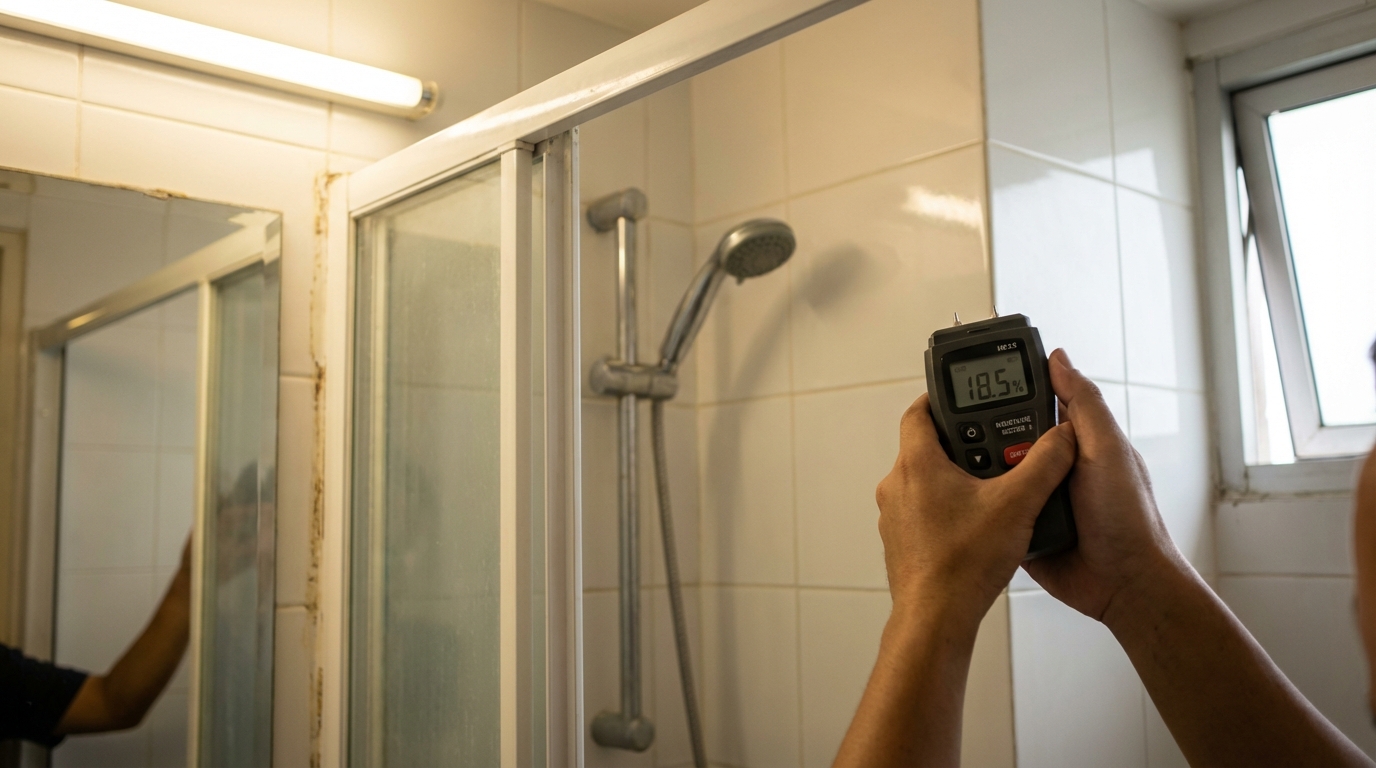
A full pre-purchase inspection at 15,900 THB (US$499) covers everything in this article for condos up to 120 sqm. Allow about 2 hours up to 45 sqm, 3 hours up to 80 sqm, and 4 hours at 120 sqm. It uses testing equipment for electrical grounding, moisture levels, AC performance, water pressure, and water quality when the unit’s water is on. The output is a detailed English-language PDF report with annotated photos and defect severity ratings. Repair-cost guidance is verbal on request; you and your agent decide how to use the evidence in negotiations.
On a 5 million THB condo, that’s about 0.3% of the purchase price. Less than half a percent of what you’re spending, to know exactly what you’re getting.
What you get after the inspection
Within two business days of the on-site inspection, you receive:
- Full PDF report in English with every finding documented and photographed
- Defect severity ratings so you know what’s cosmetic vs. what needs immediate attention vs. what’s a long-term concern
- Verbal repair-cost guidance on request
- Negotiation documentation with specific, evidence-backed reasons to renegotiate the purchase price or request repairs before transfer
The report is yours. Use it to negotiate the price down, plan renovations, budget for upcoming maintenance, or walk away from a bad deal knowing exactly why.
When to schedule your inspection
The best time is after you’ve agreed on a price in principle but before you’ve transferred ownership. Most buyers schedule inspections during the due diligence period. For new builds, you can also inspect before accepting handover from the developer.
Give us at least 48 hours notice for scheduling. The inspection runs 90 to 120 minutes, and we’ll need access to the unit, the common areas, and ideally the building’s management office.
Bangkok Inspect provides property inspection services only. This article is general information and does not constitute legal advice.