Mold in Bangkok Condos: A Health Risk Guide for Expat Families
Mold is having the time of its life in Bangkok.
Average humidity of 70-80%, frequent rain, warm temperatures year-round—it’s essentially a spa for fungal growth. And while mold is a nuisance anywhere, in Bangkok it’s a health concern that expat families need to take seriously.
If you’re relocating with children, recovering from medical procedures, or simply have respiratory sensitivities, understanding Bangkok’s mold reality is essential before you sign a lease.
Why Mold Is a Bigger Problem in Bangkok Than Back Home
In temperate climates, mold grows seasonally. Cold, dry winters kill it back. Summer gives it a few months to establish before conditions change again.
Bangkok doesn’t have that reset.
The perfect storm for mold:
- Constant warmth: 27-35°C year-round (mold thrives between 25-30°C)
- Extreme humidity: 70-80% average, exceeding 80% during rainy season (mold needs 60%+ to flourish)
- Consistent moisture: Tropical rains, condensation from AC, humidity that never fully dissipates
- Year-round growing conditions: No winter to kill mold colonies back
What might be a minor issue in Sydney or London becomes a persistent problem in Bangkok. Mold doesn’t just appear here—it establishes, spreads, and returns.
Health Risks: What Families Need to Know
For Children
Children are more vulnerable to mold exposure than adults:
- Developing respiratory systems are more sensitive to spores
- Children breathe faster, inhaling more spores relative to body size
- They spend more time on floors and surfaces where spores settle
- Immune systems are still developing defenses
Symptoms to watch for:
- Persistent coughing or wheezing
- Frequent respiratory infections
- Nasal congestion that doesn’t clear
- Skin rashes or irritation
- Worsening of existing asthma or allergies
For Those with Respiratory Conditions
If anyone in your family has asthma, allergies, or other respiratory conditions, mold exposure can:
- Trigger attacks and flare-ups
- Worsen existing symptoms
- Create new sensitivities
- Require increased medication
For Medical Tourism Patients
If you’re in Bangkok for medical treatment or recovery, mold is especially concerning:
- Compromised immune systems are more vulnerable
- Post-surgical recovery requires clean environments
- Respiratory procedures need mold-free air
- Healing bodies shouldn’t fight additional irritants
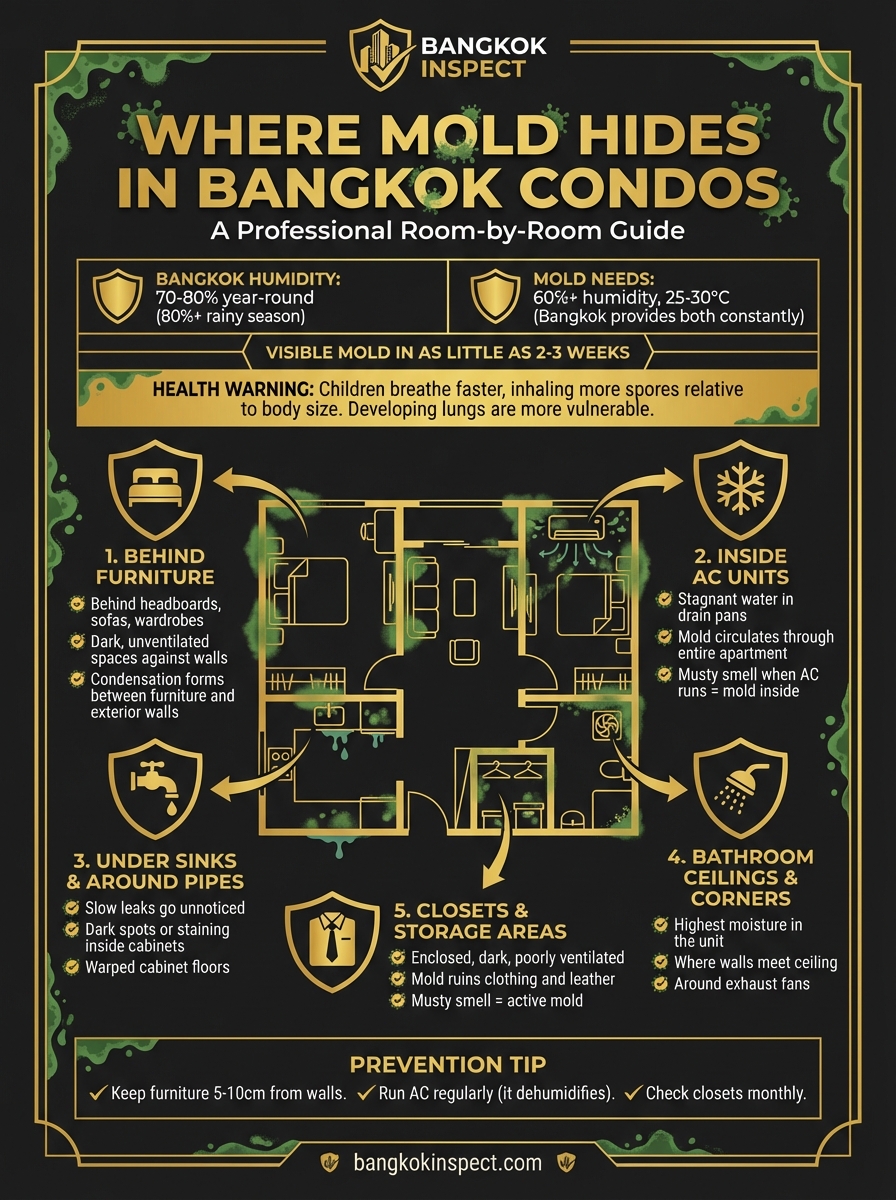
Where Mold Hides in Bangkok Condos
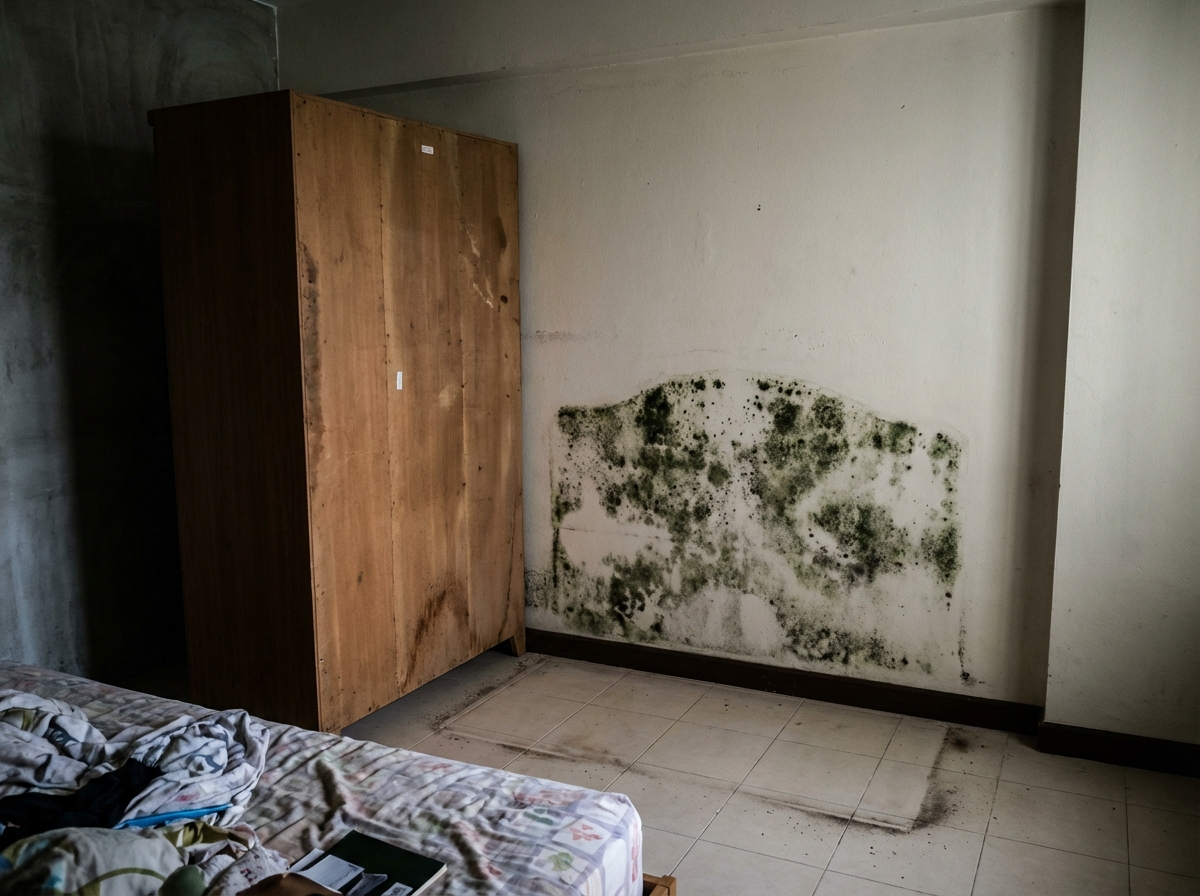
Mold is opportunistic. It grows where moisture accumulates and air circulation is poor. In Bangkok condos, that’s more places than you’d expect.
Behind Furniture
The problem: Large furniture against walls creates dark, unventilated spaces. In Bangkok’s humidity, condensation forms between furniture and walls. Mold follows.
What to check: During viewings, ask to see behind beds, sofas, and wardrobes. Look for dark spots, discoloration, or fuzzy growth on walls.
Common hiding spots:
- Behind headboards
- Behind sofas against exterior walls
- Behind wardrobes and closets
- Behind refrigerators
Inside AC Units
The problem: AC units are mold factories waiting to happen. They process humid air, generate condensation, and often have stagnant water in drain pans. A neglected AC unit can circulate mold spores throughout your entire apartment.
What to check: Ask when the AC was last professionally cleaned. Request to see the filter. If it’s heavily clogged with dust and debris, the internal components are likely worse.
Warning signs:
- Musty smell when AC runs
- Visible dark spots on vents
- Dust buildup on outlet grilles
- Water stains around the unit
Under Sinks and Around Pipes
The problem: Plumbing in humid climates sweats. Slow leaks go unnoticed. These areas rarely get ventilation or attention.
What to check: Open cabinet doors under all sinks. Look for:
- Dark spots or staining on cabinet interiors
- Warped or damaged cabinet floors
- Musty smell when cabinet opens
- Visible mold growth around pipes
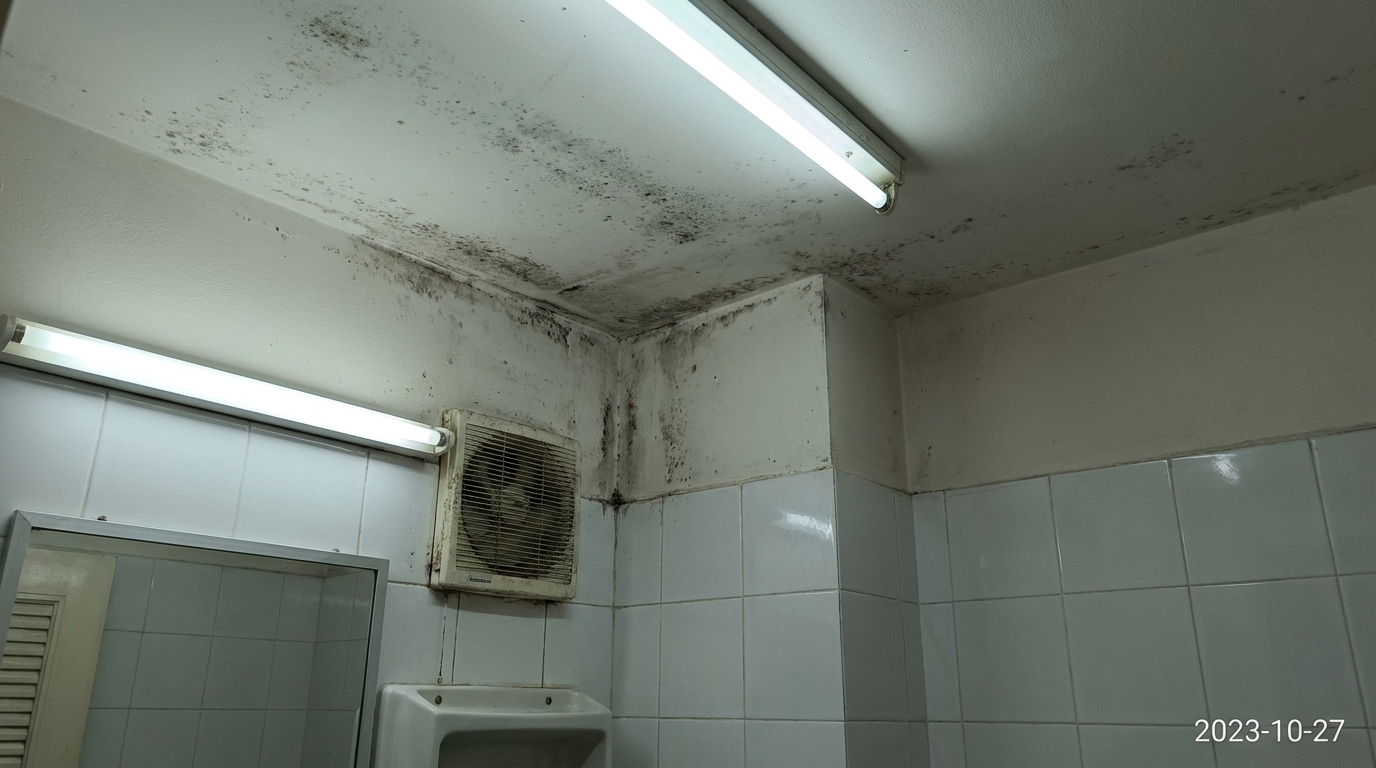
Bathroom Ceilings and Corners
The problem: Bathrooms have the highest moisture levels. In units with poor ventilation, shower steam accumulates on ceilings and in corners, creating perfect mold conditions.
What to check: Look up. Check where walls meet ceiling. Examine corners and areas around exhaust fans (if present). Dark spots or discoloration in these areas indicate moisture problems.
Closets and Storage Areas
The problem: Closets are enclosed, dark, and often poorly ventilated—exactly what mold needs. In Bangkok’s humidity, stored clothes and belongings can develop mold within weeks if conditions are right.
What to check: Open every closet. Smell for mustiness. Look for dark spots on walls, shelving, or floors. Check if closets have any ventilation.
How to Spot Early Signs During a Viewing
You won’t see established mold colonies during a viewing—landlords paint over those before showing. But you can spot indicators:
Smell Test
Close windows and turn off AC for a few minutes. Does the unit have a musty, earthy smell? Trust your nose—it detects mold your eyes can’t see.
Visual Indicators
- Discoloration on walls, especially lower portions and corners
- Paint that’s bubbled or appears recently patched
- Staining around AC units, windows, or pipes
- Dark grout in bathrooms that should be light
Physical Signs
- Soft or spongy walls when pressed gently
- Peeling paint or wallpaper
- Warped flooring near moisture sources
- Condensation on windows or walls
Questions That Reveal History
- “Has there been any mold remediation in this unit?”
- “How is the ventilation in the bathrooms?”
- “When was the AC last professionally cleaned?”
- “Have previous tenants reported any moisture issues?”
Watch for vague answers or deflection. A “no mold” answer means nothing if the landlord doesn’t know or isn’t being truthful.
Prevention Once You Move In
If you choose a unit, taking proactive steps prevents mold from becoming a problem:
Manage Humidity
- Run AC regularly, even when out (it dehumidifies)
- Consider a standalone dehumidifier for problem areas
- Keep humidity below 60% if possible (buy a cheap hygrometer)
Improve Circulation
- Keep furniture 5-10cm from walls
- Open closet doors periodically
- Use fans to circulate air in enclosed spaces
- Ensure bathroom exhaust fans work (or open windows after showers)
Regular Maintenance
- Schedule AC cleaning every 6 months
- Check under sinks monthly for leaks
- Wipe down bathroom surfaces after showers
- Address any water leaks immediately—24-48 hours is all mold needs
Monitor and Act Early
- Learn what early mold looks like (small dark spots, not obvious colonies)
- Address spots immediately with appropriate cleaners
- Document and report issues to building management
- Take persistent moisture problems seriously
Why Documentation Matters
Here’s the deposit connection: mold damage is expensive to remediate, and disputes about responsibility are common.
If mold develops during your tenancy, landlords may claim:
- You caused it through negligence
- You failed to report issues
- The damage was your responsibility to prevent
Without documentation of the unit’s condition at move-in—including any existing moisture indicators or mold-prone areas—you have limited defense.
A proper inspection documents:
- Existing mold or mold indicators
- Moisture-prone areas
- AC condition (a primary mold prevention system)
- Ventilation adequacy
- Pre-existing water damage
This documentation protects you if issues develop later.
Protecting Your Family’s Health
Mold in Bangkok is manageable, but it requires awareness. The families who have the best experiences:
- Choose units with good ventilation and well-maintained AC
- Inspect thoroughly before signing
- Document existing conditions
- Take proactive prevention steps
- Address issues immediately rather than waiting
For families with children, respiratory conditions, or recovering patients, this isn’t optional—it’s essential.
Moving your family to Bangkok? Bangkok Inspect checks for mold risk factors as part of every inspection: AC condition, ventilation, moisture indicators, and hidden problem areas. Our inspectors know where Bangkok mold hides. Book your inspection or reach us on WhatsApp, Telegram, or Messenger.
Bangkok Inspect provides independent property condition documentation to support your rental process. Our reports are designed to supplement—not replace—the jointly-signed condition report required between tenant and landlord under Thailand’s 2025 residential leasing regulations (for landlords with 3+ units). For health concerns, consult a medical professional.