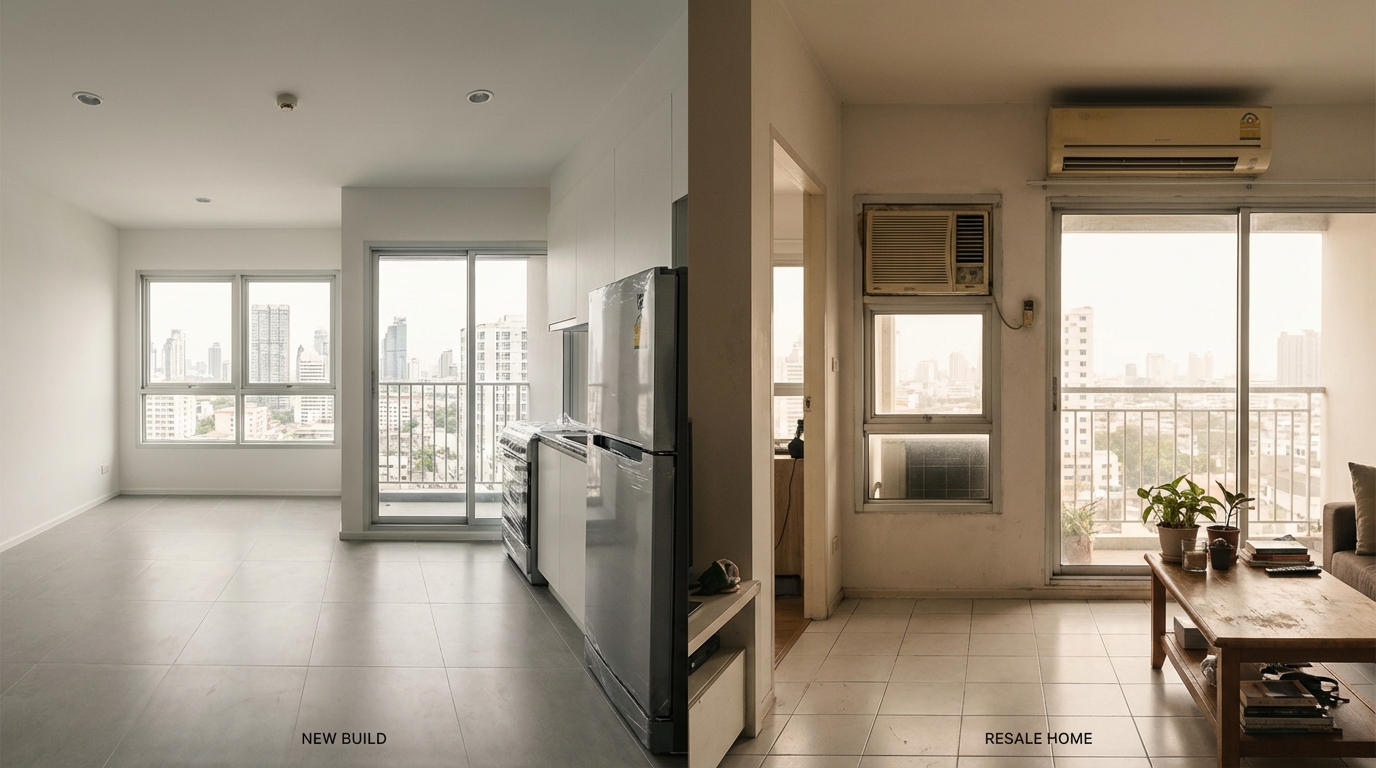
New Build vs Resale Bangkok Condos: What Inspectors Find
Most articles comparing new build vs resale condos in Bangkok talk about investment returns, rental yields, and capital appreciation. That’s fine if you’re building a spreadsheet. But if you’re actually about to hand over millions of baht for a unit, there’s a more practical question: what’s physically wrong with it?
New builds and resale condos break in completely different ways. The defects we find during inspections are different, the risks are different, and the negotiating power you have to get things fixed is different. Here’s what we actually see when we walk into each type.
New build condos: the “brand new doesn’t mean flawless” problem
There’s a natural assumption that a brand new condo should be perfect. It just came off the production line. Nobody’s lived in it. Everything should work.
That assumption is wrong about 90% of the time.
New build condos in Bangkok are constructed at speed, often by subcontractors juggling multiple projects across the city. Quality control varies wildly between developers, and even good developers have bad days. Here’s what we consistently find.
Finishing defects
This is the single biggest category of issues in new builds. The structure itself is usually fine. The finishing work is where things fall apart.
Tiles are the most common offender. We regularly find tiles that are hollow underneath (not properly bonded to the substrate), tiles with uneven grout lines, cracked tiles hidden behind bathroom fixtures, and lippage (where one tile sits higher than its neighbor). Hollow tiles might not seem like a big deal, but they crack under foot traffic over time. Replacing them later means ripping up the floor.
Paint and plaster issues show up in almost every new unit we inspect. Hairline cracks in plaster, uneven paint coverage, drips, splatters on window frames. Individually minor. But they tell you something about the care that went into the unit.
Doors and cabinetry that don’t close properly, drawers that stick, soft-close hinges that don’t actually soft-close. These are the things you notice on day three of living there, not during a 20-minute walkthrough with the sales team.
Window and sealing issues
Bangkok gets serious rain. We’re talking tropical downpours that can dump 50mm in an hour. Windows that aren’t properly sealed will let water in during the first real storm.
We check window seals, the gaps between frames and walls, and whether caulking has been applied consistently. In new builds, we regularly find gaps that were missed entirely or sealed with such a thin bead of silicone that it won’t last a single rainy season. On higher floors, wind-driven rain makes this worse.
Plumbing: the sewer gas problem
This one catches people off guard. New condos sometimes have plumbing traps that weren’t properly installed or, in some cases, weren’t filled with water before handover. The result? Sewer gas seeping into the unit through floor drains, especially in bathrooms that don’t get used often (like a second bathroom in a two-bed unit).
We also check water pressure at every tap, drainage speed, and look under sinks for connections that were hand-tightened but not properly sealed. Slow leaks under a bathroom vanity can go unnoticed for months and cause real water damage.
Electrical
Wiring in new builds is usually up to code, but we still find outlets that aren’t grounded, light switches wired incorrectly (on/off reversed), and the occasional outlet that simply doesn’t work. We test every outlet and switch in the unit. It takes time, but it catches problems that are easy to fix during the warranty period and annoying to fix later.
Cheap materials
Some developers cut costs in ways that aren’t obvious during a sales viewing. Thin countertops that chip easily, bathroom fixtures from no-name manufacturers, hollow-core doors marketed as solid. An inspector who has seen hundreds of units can spot where a developer saved money. That doesn’t mean it’s a deal-breaker, but it should factor into your price negotiation.
The warranty advantage
Here’s the upside of buying new: you have warranty coverage. In Thailand, new builds typically come with a one-year defects warranty and five-year structural warranty. If your inspection finds problems, you have real negotiating power. The developer is legally obligated to fix defects reported during the warranty period.
This is exactly why getting an inspection before your warranty expires matters. Every defect we document becomes something the developer has to address. Without documentation, you’re relying on the developer’s goodwill after the warranty clock runs out.
Resale condos: the “what has this place been through?” problem
Resale condos have a different risk profile. The construction defects have either been fixed or have been causing slow damage for years. The questions shift from “was this built right?” to “how has this place been maintained?”
There’s a practical reason resale deserves its own lens. Most inspection work in Bangkok is shaped around the developer handover: the snag list you walk through before you accept the keys. Resale is a different job; the wear runs years deep, and renovations often sit on top of old damage nobody documented. There’s no developer left to call. It’s work we do every week, and it reads nothing like a handover.
Water damage history
This is the number one concern in resale units. Bangkok’s combination of heavy rain, high humidity, and tropical heat creates conditions where water damage accumulates over time.
We look for staining on ceilings and walls (which might have been painted over), soft spots in flooring near wet areas, bubbling or peeling paint that suggests moisture behind the surface, and signs of previous leaks around windows and AC units. A fresh coat of paint in a bathroom should make you curious, not reassured.
Previous renovation quality
Many resale condos in Bangkok have been renovated at least once. The quality of that work varies a lot. We’ve seen everything from professional-grade kitchen refits to bathroom tile jobs that were clearly done by someone watching YouTube tutorials.
Common renovation red flags: electrical work done without permits, plumbing modifications that created new leak points, walls that were moved without proper structural consideration, and flooring installed over existing flooring (creating height issues at doorways).
The worst cases involve renovations that covered up existing problems. New tiles over water-damaged substrate. Fresh paint over mold. A nice-looking kitchen installed over deteriorating plumbing.
Aging AC systems
Air conditioning in Bangkok isn’t optional. It runs hard, sometimes 12+ hours a day, year-round. AC systems in resale condos are often 5-10 years old and showing it.
We check refrigerant levels, drainage lines (a major source of water damage when they clog), filter condition, and overall cooling performance. Replacing a split-unit AC runs THB 20,000-35,000+, so knowing the condition before you buy affects your total cost.
Mold history
Mold loves Bangkok. High humidity, warm temperatures, and any lapse in AC usage creates perfect growing conditions. In resale units, we look for signs of current mold and signs of previous mold that was cleaned but not fully dealt with.
Behind furniture, inside closets, around window frames, underneath sinks. These are the spots where mold hides. Surface cleaning removes what you can see. Proper remediation addresses why it grew in the first place.
Building management and common areas
With a resale condo, you can actually evaluate the building management because they have a track record. Look at the lobby, hallways, pool area, and gym. Are they well-maintained? Is the parking structure showing signs of concrete deterioration? How responsive is the juristic office?
A building with declining management will eventually drag down your unit value regardless of how nice the interior looks. We note the condition of common areas as part of our inspection because it tells you where the building is headed.
New build vs resale: inspection comparison
| Category | New Build | Resale |
|---|---|---|
| Most common defects | Finishing quality (tiles, paint, doors) | Water damage and renovation quality |
| Plumbing | Installation errors, missing traps | Aging pipes, modified plumbing |
| Electrical | Wiring errors, ungrounded outlets | Unpermitted modifications, aging wiring |
| AC | Usually new and functional | Often 5-10 years old, heavy wear |
| Windows | Sealing gaps, installation issues | Aging seals, frame deterioration |
| Mold | Rare (unless poor ventilation design) | Common, especially in poorly maintained units |
| Warranty | 1-year defects, 5-year structural | None |
| Common areas | New but unproven management | Established but potentially declining |
| Leverage for repairs | High (warranty period) | Low (negotiate price reduction instead) |
Post-earthquake considerations
After the earthquake events in early 2025, structural concerns became part of the conversation for both new and resale condos in Bangkok.
For older buildings, the question is whether there was pre-existing structural damage before the seismic activity, and whether the earthquake made it worse. Hairline cracks in concrete that were cosmetic before might have deepened. We look for new cracking patterns, especially around load-bearing elements.
For new builds, the concern is different. Many newer buildings in Bangkok were designed before updated seismic awareness, and their response to ground movement was untested until recently. Developers may have addressed any issues, but an independent inspection confirms that.
Either way, structural assessment has become a more standard part of what buyers ask about. It should be.
The bottom line: both types need an inspection
The defects are different, but the need is the same. New builds hide construction shortcuts behind fresh paint and showroom staging. Resale condos hide years of wear, questionable renovations, and accumulated damage behind a seller’s best cleanup effort.
A professional inspection costs US$499 (THB 15,900) for condos up to 120 sqm. That’s less than 0.5% of most condo purchase prices in Bangkok. What it gives you is a documented, photographic record of every issue in the unit, which you can use to negotiate repairs (new build warranty claims) or negotiate price (resale purchases).
You’re about to make one of the biggest purchases of your life in a country where you might not speak the language or fully understand construction standards. Whether the condo is fresh off the construction line or has ten years of history, knowing exactly what you’re buying before you sign is the point.
Buying a resale unit?
Resale and second-hand condos aren’t a special case here. They’re routine. What isn’t routine is the clock: on a contested unit, buyers get hours to decide, not weeks. And the thing stalling the decision usually isn’t price — it’s that nobody in the room can say what the unit actually is.
An independent inspection, done fast, takes that off the table. You get a documented picture of the unit while the deal is still live — enough to commit with conviction, or to walk without wondering.
If you’re weighing a resale purchase and want to see how the work is done, start here: Resale condo inspection.
Bangkok Inspect provides property inspection services only. This article is general information and does not constitute legal advice. For legal matters, consult a licensed Thai attorney.