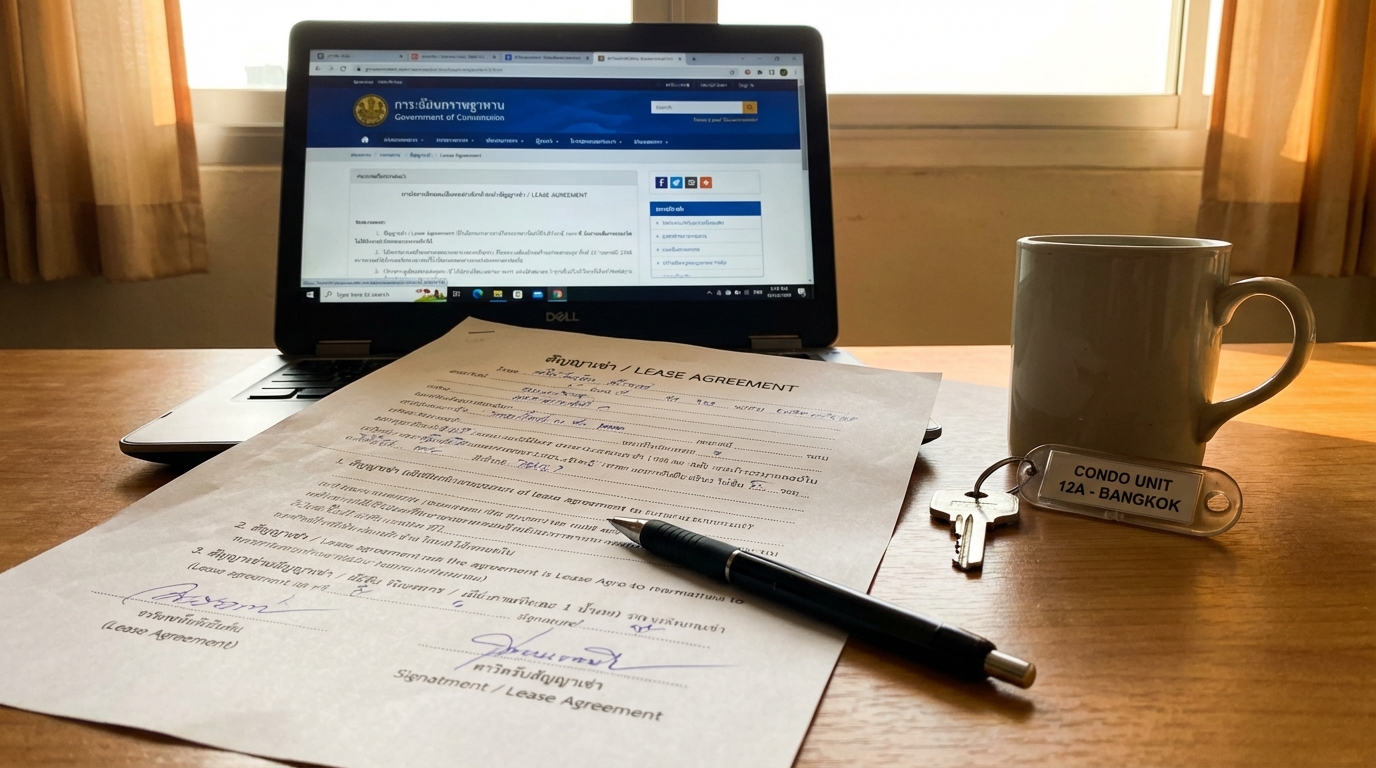
Thailand's 2025 Rental Law: What Expats Need to Know
If you’ve rented in Thailand before September 2025, you probably signed whatever document the landlord put in front of you. Maybe it was in Thai. Maybe you had no idea what condition the unit was in when you moved in. And maybe — like thousands of expats before you — you discovered the consequences when it was time to get your deposit back.
Thailand’s new rental regulations change some of this. But not all of it. Understanding what the law requires, and what it doesn’t, is the difference between real protection and false confidence.
Here’s what changed and what it means for you.
What Changed in September 2025
In September 2025, Thailand’s Office of the Consumer Protection Board (OCPB) introduced new regulations governing residential leases. The rules target landlords operating as businesses, specifically those with three or more residential rental units.
The regulations establish several tenant protections:
- Security deposits are capped at one month’s rent (previously unregulated)
- Advance rent is limited to one month
- A jointly-signed condition report is required at move-in
- Deposit return timelines are now specified (typically 7-30 days after lease end, depending on circumstances)
For expats, the biggest change is the condition report requirement. Before these regulations, documenting a unit’s condition was entirely voluntary. Most tenants didn’t do it properly.
Which Landlords Are Covered?
This is where misunderstandings begin.
The OCPB regulations apply to landlords with three or more residential rental units. This includes:
- Property management companies
- Landlords who own multiple investment condos
- Serviced apartment operators
- Residential rental businesses
The regulations do not apply to:
- Individual landlords renting out a single property
- Landlords with only two rental units
- Short-term holiday rentals (separate regulations may apply)
- Commercial leases
In Bangkok’s condo market, this means the regulations cover a significant portion of rental stock, but not all of it. If you’re renting from an individual who owns just one or two units, the new protections don’t technically apply to your lease.
That said, many landlords are adopting the documentation standards regardless, since proper condition reports benefit both parties in avoiding disputes.
The Jointly-Signed Condition Report: What It Actually Requires
The centerpiece of the 2025 regulations is the jointly-signed condition report. Both tenant and landlord must sign a document recording the unit’s condition at move-in.
In practice, this means:
- The landlord must provide a condition checklist or report
- Both parties inspect the unit and document its state
- Both signatures are required for the document to be valid
- This report sets the baseline for assessing damage at move-out
What the regulation doesn’t specify:
- The format or level of detail required
- Whether photos are mandatory (they’re not, legally)
- Who creates the documentation
- How thorough the inspection must be
The regulation creates a framework. It doesn’t guarantee anyone will use that framework well.

What This Means for Foreigners Specifically
The 2025 regulations are a step forward. But they also highlight a documentation gap that affects foreigners more than Thai tenants.
The language barrier problem remains:
The condition report, like all legal documents in Thailand, is governed by Thai language. If there’s a dispute, the Thai version controls. You might think you’ve documented a crack in the wall, but if the Thai text says something different, that’s what matters in court.
Move-in inspections are rushed:
Signing a lease in Bangkok often happens fast. The landlord wants keys handed over. You’re tired from apartment hunting. The condition report turns into a formality — a quick walk-through while everyone stands around waiting.
The burden of proof is still on you:
If you dispute deductions from your deposit, you need to prove the damage existed before you moved in. A signed condition report helps, but only if it documents the pre-existing issues. “Walls in good condition” doesn’t help you when the landlord claims you caused water stains that were already there.
The Documentation Gap the Law Doesn’t Address
Thailand’s 2025 regulations require documentation. They don’t guarantee adequate documentation.
The jointly-signed condition report is a minimum standard. It’s designed to prevent the worst disputes — cases where no documentation existed at all. But it doesn’t address:
Hidden issues that aren’t immediately visible:
- Mold behind furniture
- AC drainage problems
- Slow leaks under sinks
- Pest infestation history
- Water damage from previous flooding
Building-level concerns:
- Earthquake safety inspection status (the March 2025 Myanmar earthquake prompted city-wide safety assessments)
- Fumigation and pest control records
- Water pressure and plumbing condition
- Building management responsiveness
The “it was already like that” problem:
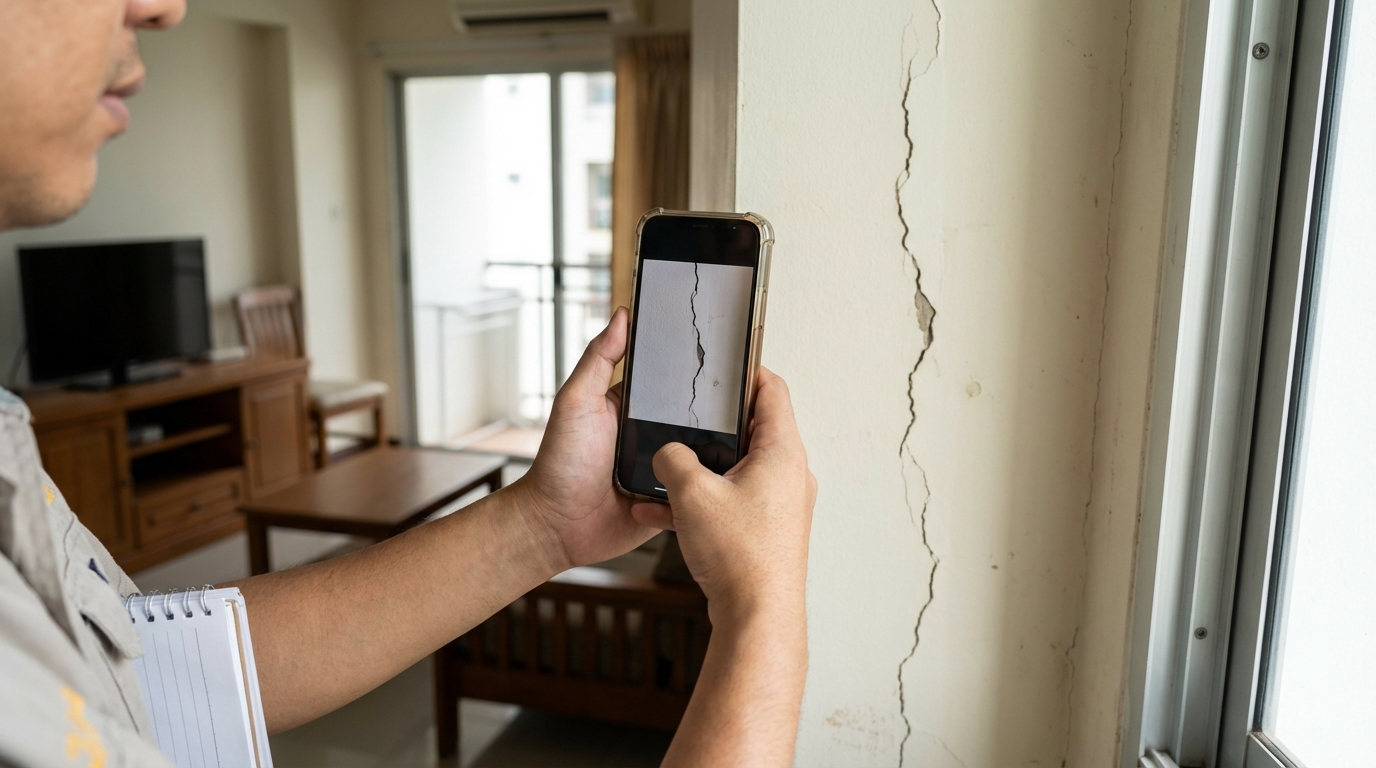
Without detailed photographic evidence, condition reports become your word against the landlord’s. A signed document saying “minor wear” doesn’t prove whether specific scratches were pre-existing.
This is where independent inspection fills the gap the law creates but doesn’t close.
When a leak, repair, or deposit problem still needs moving forward, Get It Fixed can diagnose it, manage the fix, or represent you in the conversation.
What Happens If There’s a Dispute
Here’s the reality most expats don’t consider until it’s too late: if your deposit dispute goes to court, proceedings are in Thai.
The civil court process:
- Filing requires Thai language documentation
- Proceedings are conducted in Thai
- You’ll need a Thai lawyer (costs often exceed the disputed amount)
- Cases can take months or years to resolve
- The Thai version of any bilingual document governs
For most expats, this means deposit disputes under a certain threshold aren’t worth pursuing legally. Landlords know this. It’s not about bad faith — it’s about practical advantage.
Your realistic options:
- Negotiate directly (easier with strong documentation)
- Mediate through the OCPB consumer protection process
- Accept partial recovery and move on
- Pursue civil court (rarely practical for deposit amounts)
Strong documentation doesn’t guarantee you’ll recover every baht. But it shifts the negotiation in your favor and makes the OCPB mediation process more likely to succeed.
How Thailand Compares to Other Countries
Thailand’s 2025 regulations are progress, but they don’t match deposit protection standards in countries many expats come from.
| Country | Deposit Protection | Third-Party Holding | Dispute Resolution |
|---|---|---|---|
| UK | Mandatory government schemes | Yes - landlord cannot hold deposit | Free adjudication service |
| Australia | State-run bond schemes | Yes - held by government | Tribunal process |
| Singapore | No mandatory scheme | No | Small claims tribunal |
| Thailand (2025) | Capped at 1 month | No - landlord holds deposit | Civil court (Thai language) |
The key difference: in the UK and Australia, your deposit is held by an independent third party. The landlord can’t decide to keep it. In Thailand, even under the new regulations, your deposit sits in the landlord’s account until they choose to return it.
This isn’t a criticism. It’s a regulatory reality. Every country structures rental markets differently. Thailand’s system places more responsibility on tenants to document and protect themselves.
How to Protect Yourself Beyond Legal Minimums
The 2025 regulations establish a floor, not a ceiling. Here’s how to build protection above it:
Before signing:
- Get an independent inspection from someone with no stake in whether you sign
- Document every defect with timestamped photos
- Check building-level issues (earthquake inspection status, pest control records, management responsiveness)
- Understand exactly what the Thai-language lease says
At move-in:
- Don’t rush the condition report. Take your time
- Add specific descriptions, not just “good condition”
- Include photos as attachments (even if not legally required)
- Note any verbal promises about repairs in writing
During tenancy:
- Document any new damage or issues immediately
- Keep all communication with landlord/management in writing
- Report problems through official channels (LINE messages aren’t ideal)
At move-out:
- Schedule a walk-through inspection
- Document the unit’s condition again
- Get written confirmation of any agreed deductions
The Bottom Line
Thailand’s 2025 rental regulations are an improvement. For the first time, landlords with multiple properties must provide condition documentation and follow deposit return timelines. That’s progress.
But the regulations don’t eliminate the documentation gap that costs expats money. They don’t hold deposits in escrow. They don’t guarantee that rushed move-in inspections will catch hidden problems. And they don’t change the fact that civil proceedings are in Thai.
The law sets minimum requirements. Your job is to exceed those minimums with documentation that protects you.

Bangkok Inspect provides independent property condition documentation to support your rental process. Our reports are designed to supplement (not replace) the jointly-signed condition report required between tenant and landlord under Thailand’s 2025 residential leasing regulations (for landlords with 3+ units). Bangkok Inspect is not a licensed property surveyor or legal advisor. For legal matters, consult a qualified Thai attorney. Regulations may change; verify current requirements with the Office of the Consumer Protection Board (OCPB).
Have questions about documenting your next Bangkok rental?
Contact us via WhatsApp | Telegram | Email
Or visit bangkokinspect.com to learn more about our inspection services.