5 Hidden Dangers in Bangkok Rental Properties
The Bangkok rental market looks great in photos. In person, it’s different. Landlords and agents show you gleaming floors and city views. They don’t mention the electrical panel held together with electrical tape or the black mold growing behind the bathroom tiles.
After inspecting over 2,000 properties across Bangkok, we’ve documented the problems that keep showing up. Here are the five most dangerous issues landlords don’t disclose.
1. Electrical Fire Hazards
Thailand’s tropical climate means air conditioning runs 24/7, putting constant load on electrical systems. In older buildings, we regularly find overloaded circuit breakers handling AC units, water heaters, and every outlet on a single 15-amp line. Exposed wiring sits in ceiling spaces and behind appliances. GFCI outlets look legitimate but aren’t actually connected. Aluminum wiring, common in 1990s buildings, overheats under sustained load.
We inspected a luxury condo last year where aluminum wiring had loose connections at multiple points. That combination causes hundreds of fires annually in Bangkok. The tenant had already signed the lease.
Ask to see the electrical panel during your viewing. Look for rust, burn marks, or multiple wires twisted together. If the landlord refuses, find another apartment.
2. Mold and Water Damage
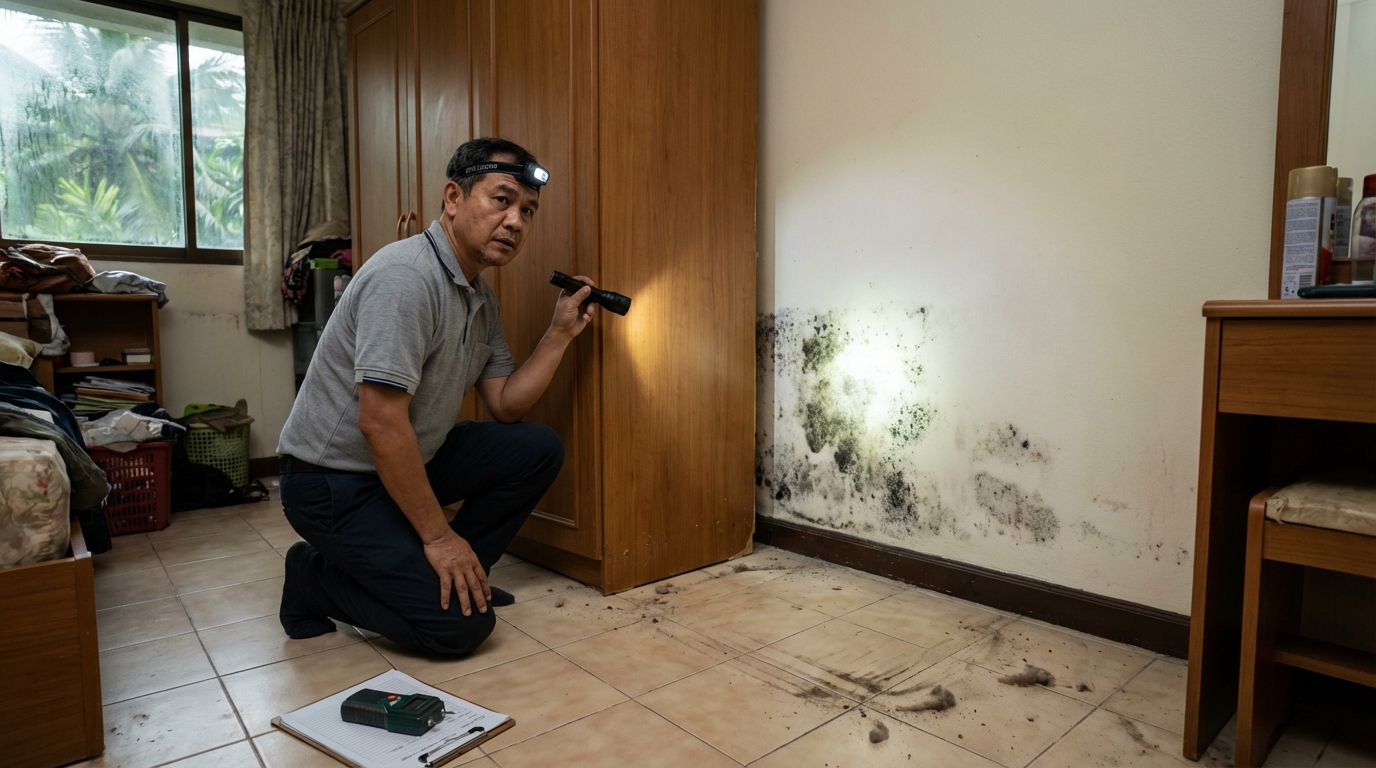
Bangkok’s humidity creates ideal conditions for mold. The danger isn’t always visible. Mold grows behind walls, under floors, and inside AC units where you can’t see it.
Check behind bathroom tiles for soft spots or discoloration. Air conditioning units are mold factories in tropical climates. Look under sinks and around pipes where water leaks create hidden colonies. Wardrobes against exterior walls trap moisture.
We found a recently renovated apartment where the landlord had painted over active mold covering an entire bedroom wall. The tenant would have been breathing spores every night.
Toxic mold causes respiratory issues, headaches, and allergic reactions. Children and people with asthma are most vulnerable.
3. Structural Water Leaks
Monsoon season reveals what landlords hide during dry months. Water damage causes ceiling collapse in older buildings with flat roofs. It erodes foundations in basement and ground floor units. Balconies deteriorate as rebar rusts and concrete crumbles. Window seals fail, flooding interiors during heavy rain.
We inspected a luxury penthouse that looked perfect. Then we checked the ceiling. Water stains indicated the roof had been leaking for years. The repair estimate was over US$15,000.
Red flags include peeling paint, water stains, musty odors, and unusually cheap rent for the area. All of these point to undisclosed water problems.
4. Pest Infestations
Bangkok’s tropical climate supports large populations of cockroaches, rats, bed bugs, and termites. These aren’t just unpleasant. They’re health hazards and they destroy property.
Termites are the worst. We’ve seen wooden furniture collapse from hollow, termite-eaten legs. Door frames so damaged they crumble when touched. Entire built-in wardrobes needing replacement within months.
Bed bugs have become epidemic in Bangkok’s rental market. They hide in mattresses, sofas, and even electrical outlets. Eradication is expensive and time-consuming.
Many landlords spray pesticides before showings to mask active infestations. The bugs return within weeks. You’re left with the problem.
5. Poor Ventilation and Indoor Air Quality
Modern Bangkok condos prioritize air conditioning over natural ventilation. CO2 builds up, causing headaches, fatigue, and poor sleep. Cheap furniture and building materials release formaldehyde. Paint, cleaning products, and synthetic materials off-gas in sealed spaces. Humidity problems lead back to mold.
We tested one luxury studio and found CO2 levels three times higher than recommended standards. The tenant had been experiencing daily headaches for months.
Look for windows that actually open and cross-ventilation. Avoid units that rely solely on AC. If a unit smells new or has a chemical odor, it likely has high VOC levels.
The Cost of Hidden Dangers
These issues are expensive. Our inspections have helped clients avoid US$4,800 in deposit losses from pre-existing damage, US$2,400 in emergency repairs landlords refused to cover, and US$1,600 in medical bills from mold exposure. That doesn’t count the stress and legal disputes.
Protect Yourself Before Signing
Landlords won’t disclose these problems. Our professional inspections cost less than a single month’s rent but have saved clients tens of thousands of dollars.
We check complete electrical system safety, use moisture meters and thermal imaging for hidden water damage, test structural integrity of balconies and high-risk areas, conduct comprehensive pest inspections, and assess indoor air quality and ventilation.
Schedule your inspection before signing any lease. Your health, safety, and money depend on knowing what you’re actually renting.
Contact Bangkok Inspect for a pre-rental assessment. We’ll tell you what the landlord won’t.