Bangkok Condo Developer Warranty: What to Check Before It Expires
You just bought a condo in Bangkok. The developer handed over the keys, you signed the transfer papers, and now you own a brand-new unit. Everything looks great.
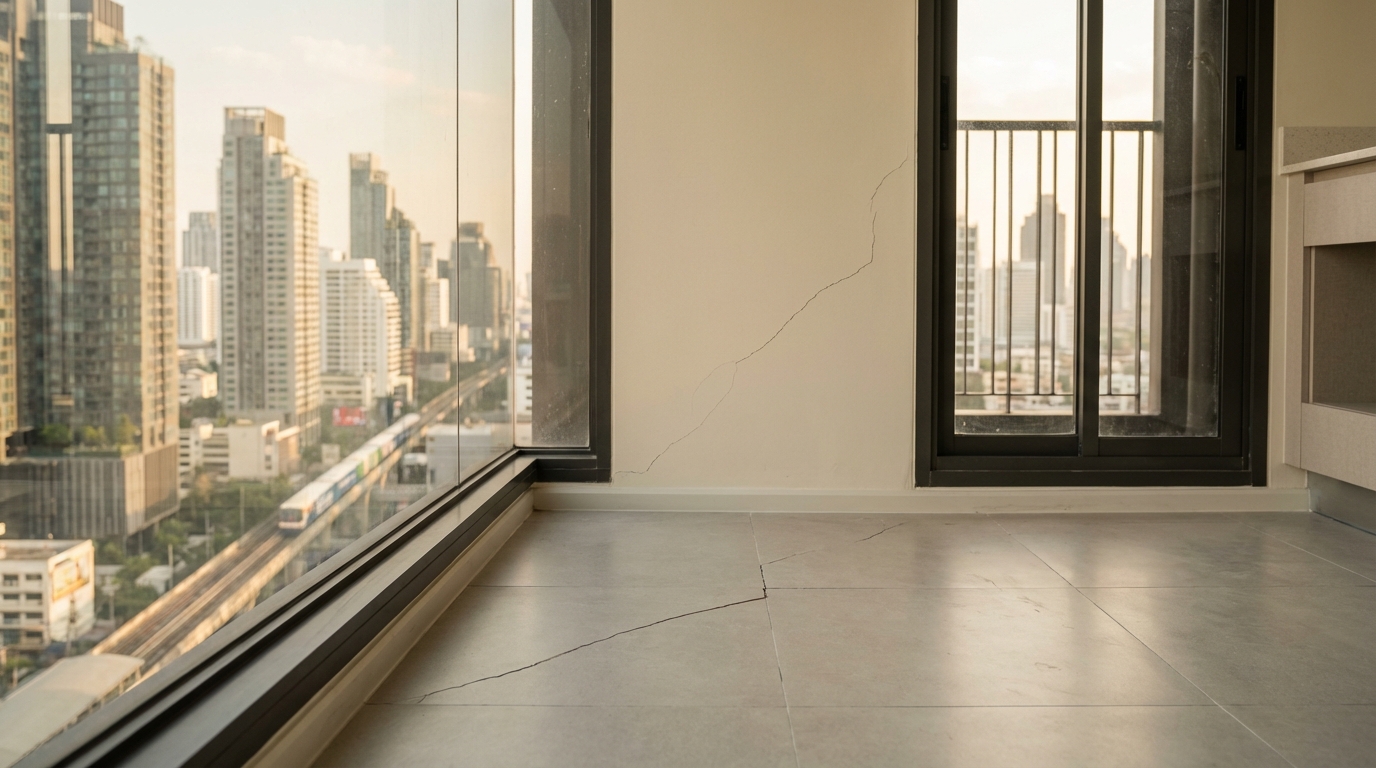
Fast forward eleven months. You notice a crack running along the bathroom wall. Water is pooling under the kitchen sink. The tiles near the balcony door have started lifting.
Is the developer responsible? Can you still get this fixed for free? The answer depends on your warranty, and most buyers don’t actually read theirs until something breaks.
What follows is a breakdown of developer warranties in Bangkok — what they actually cover and how to use them before they expire.
Two warranties, not one
Most buyers think they have a single warranty from their developer. You’re actually protected by two separate things:
1. The statutory warranty under Thai law
This exists whether your developer mentions it or not. Thai Civil and Commercial Code Section 600 sets a baseline that applies to all construction work.
2. The contractual warranty in your Sale and Purchase Agreement (SPA)
This is what your developer explicitly promises. It might be more generous than the law requires, or it might try to limit the developer’s obligations. The terms vary by developer and by project.
These two warranties operate independently. Even if your SPA warranty has expired, your statutory rights under Thai law may still apply.
What Thai law actually says
Most people get this wrong.
There’s a widespread belief that Thai law only gives you a 1-year defect warranty on your condo. Not accurate. Section 600 of the Thai Civil and Commercial Code provides a 5-year warranty period for structural defects on land-based structures like buildings.
The 1-year part is different: once a defect appears or is discovered, you have 1 year to bring a claim. So if a structural crack shows up in year four, you still have until year five to pursue it.
There’s also an exception with no time limit at all. If the contractor deliberately concealed a defect, the standard limitation periods don’t apply.
What counts as “structural” matters. Foundation problems, load-bearing wall cracks, major waterproofing failures that affect the building envelope, structural settling issues — those qualify. A scratched countertop or a sticky door handle? Not covered under the structural warranty.
What your SPA warranty typically covers
The contractual warranty in your SPA is usually more detailed than the statutory one. It breaks down coverage by category and often specifies different time periods for different items.
Most Bangkok developer warranties include the following:
Structural elements (2-5 years typical)
- Foundation and load-bearing walls
- Concrete structure and beams
- Major waterproofing systems (roof, exterior walls)
- Structural settling and cracking
Mechanical and electrical systems (1-2 years typical)
- Plumbing pipes and connections
- Electrical wiring and distribution boards
- Water heater installations
- Built-in ventilation systems
Finishing and fixtures (6 months to 1 year typical)
- Floor tiles and wall tiles
- Built-in cabinetry and countertops
- Door and window hardware
- Paint and wall finishes
- Sanitary ware (toilets, sinks, faucets)
What’s usually NOT covered
- Normal wear and tear
- Damage caused by the owner (drilling into waterproofing membranes, overloading electrical circuits)
- Modifications made after handover
- Appliances with their own manufacturer warranty (AC units, ovens, washing machines)
- Common area defects (these fall under the juristic person’s responsibility to pursue with the developer)
Some developers go further
Not all warranties are the same. Some Bangkok developers offer coverage well beyond the legal minimum.
MQDC, for example, offers a 30-year structural warranty on some of their projects. That’s exceptional — not standard in the market — but it shows the range. Other large developers like Sansiri, Ananda, and AP Thai typically offer 1-2 year full warranties with longer structural coverage.
When comparing developers, the warranty terms are worth reading carefully. Strong warranty coverage signals confidence in construction quality.
How to actually use your warranty
Having a warranty means nothing if you don’t follow the process.
Step 1: Document the defect
Take photos and video. Note the date you first noticed the problem. Measure cracks if applicable. The more documentation you have, the harder it is for anyone to dispute.
Step 2: Notify the developer in writing
Most SPAs require written notification. Send it via registered mail to the developer’s office address listed in your SPA. Email works as a backup, but registered mail creates a paper trail that’s harder to deny.
Keep a copy of everything you send.
Step 3: Give them time to respond
Standard practice is a 30-day remedy period. The developer should acknowledge your claim and either schedule a repair or explain why they believe the defect isn’t covered.
Step 4: Follow up
If they don’t respond within 30 days, send a follow-up letter. Document the lack of response. If the developer keeps ignoring you, this documentation becomes relevant when you need to escalate.
What if the developer refuses?
If the developer disputes the claim or refuses to fix the issue, you can file a complaint with the Office of Consumer Protection Board (OCPB) or take the matter to the Thai courts. At that point you’d want a licensed Thai attorney who handles property disputes.
When to book a warranty inspection
Timing matters. You want to catch defects while you still have coverage, not after it’s expired.
Before the 1-year mark
This is the big one. Most SPA warranties cover finishing and fixtures for only 6-12 months. A professional inspection before the 1-year mark catches things like:
- Cracked or hollow tiles that weren’t obvious at handover
- Grout deterioration in wet areas (bathrooms, kitchens)
- Plumbing leaks that only appear after months of use
- Electrical issues — outlets that don’t work, circuits that trip
- Door and window seal failures that let in water during rainy season
- Paint bubbling or peeling, which often signals moisture behind the wall
- Drainage problems on balconies that only show up during heavy rain
Many of these defects aren’t visible at handover. They develop over the first few months as the building settles and goes through its first rainy season. A brand-new condo that looked perfect in March might show water ingress problems by October.
Before the 5-year mark
By year four or five, you’re looking at bigger issues:
- Structural cracks that have developed over time
- Waterproofing failures in bathrooms and balconies
- Water staining on ceilings, which may indicate leaks from the unit above or from common area plumbing
- Window frame separation from the building envelope
- Persistent dampness in walls, particularly external walls
These defects fall under the longer statutory warranty from Section 600. Catching them before the 5-year mark means you can still file a claim.
What a warranty inspection looks like
A warranty inspection is different from a pre-purchase inspection. You already own the unit. The goal is to identify every defect that falls under your warranty coverage so you can submit a complete claim to the developer.
The inspector goes through the unit systematically.
Surfaces — every wall, floor, and ceiling is checked for cracks, unevenness, bubbling, staining, and damage. Tiles are tapped to check for hollow spots underneath, which indicates poor adhesion that will lead to cracking or lifting later.
Wet areas — bathrooms and kitchens get extra attention. Water is run through every fixture. Drains are tested for flow rate and backflow. Seals around bathtubs, shower screens, and sinks are inspected for any signs of water escaping where it shouldn’t.
Plumbing — all visible pipes are checked for leaks, corrosion, and proper installation. Water pressure is tested. Hot water delivery is confirmed.
Electrical — every outlet, switch, and light fixture is tested. The distribution board is opened and inspected. Circuit breakers are checked. GFCI protection in wet areas is verified.
Windows and doors — all windows and sliding doors are operated to check for smooth function, proper locking, and seal integrity. Frames are inspected for gaps.
Balcony and exterior — drainage is tested, waterproofing at the threshold is checked, and railings are tested for stability.
After the inspection, you get a detailed report with photos documenting every defect found. This report is what you submit to the developer with your warranty claim. It’s harder for a developer to push back when they’re looking at a professional report backed by photographic evidence.
The cost of waiting
The math is simple.
A warranty inspection for a Bangkok condo costs US$499 (THB 15,900) for units up to 120 sqm. Fixed price, everything included.
A single plumbing repair after your warranty expires might run THB 3,000-8,000. Tile replacement for a bathroom floor: THB 10,000-25,000. Waterproofing remediation on a balcony: THB 15,000-40,000. Structural crack repair: THB 20,000 and up.
One inspection that catches three or four warranty-eligible defects pays for itself several times over.
And once that warranty window closes, it’s closed. The developer has no obligation to fix anything. Every repair comes out of your pocket.
Don’t wait for problems to appear
The best time to do a warranty inspection is before you notice anything wrong. Many defects aren’t visible to an untrained eye. Hollow tiles feel solid when you walk on them. Slow plumbing leaks hide behind walls for months before staining shows. Waterproofing failures only reveal themselves during heavy rain.
A professional inspection catches these problems while your developer is still on the hook. That’s the entire point.
If you’re approaching your 1-year or 5-year warranty deadline, get in touch with us to schedule a warranty inspection. We’ll give you a complete defect report you can hand directly to your developer.
Bangkok Inspect provides property inspection services only. This article is general information and does not constitute legal advice. For legal matters, consult a licensed Thai attorney.