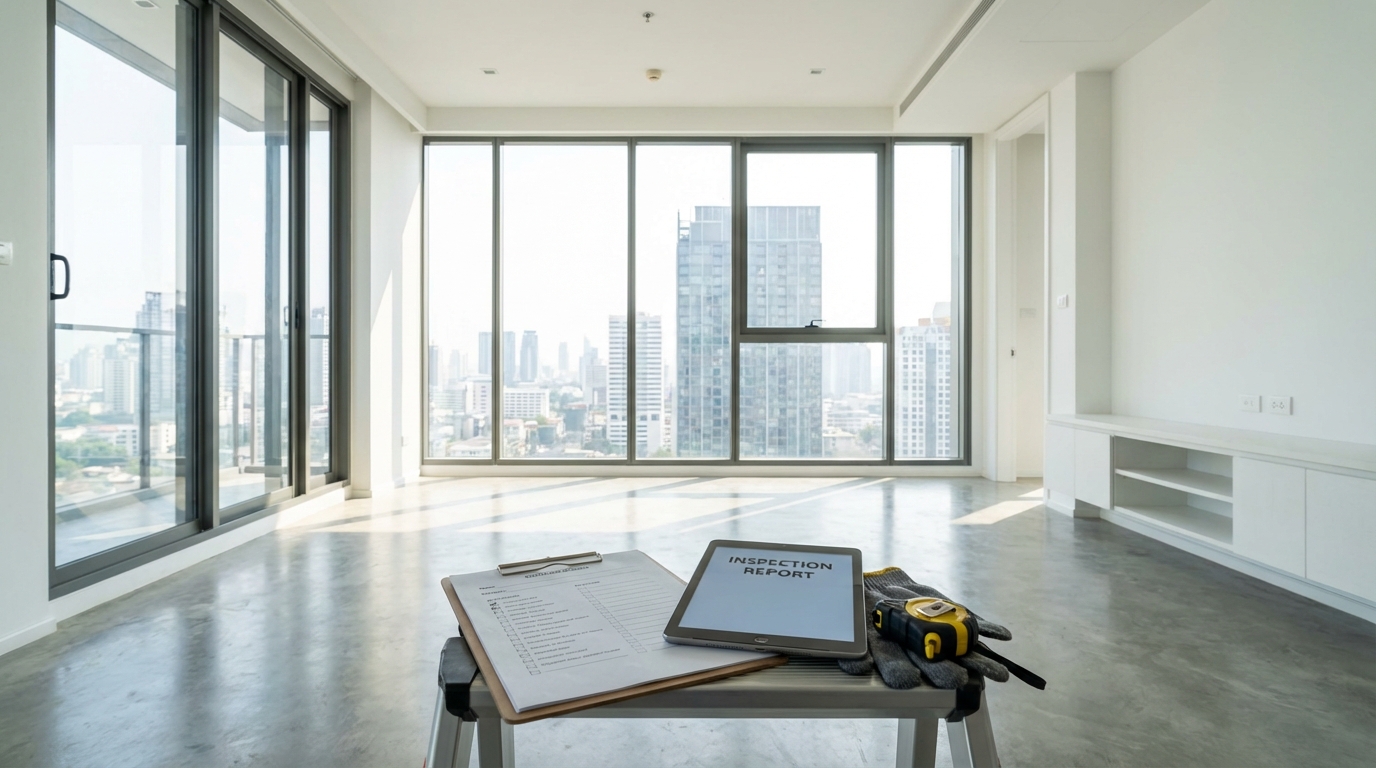
The Move-Out Inspection: A Bangkok Landlord's Essential Guide
Your tenant gives notice. The lease ends in 30 days. You’re already thinking about the next tenant and how quickly you can turn the unit around. But there’s one step between this tenant and the next that determines whether you keep their deposit or face a dispute dragging on for months.
The move-out inspection.
Most landlords treat this as a formality. Walk through, note obvious damage, deduct from the deposit, move on. But poor documentation during this inspection makes it hard to justify deductions when the tenant disputes them.
Here’s how to do it right.
Why Move-Out Inspections Matter
Thailand’s 2025 OCPB regulations (for landlords with 3+ units) require jointly-signed condition reports at move-in. But they don’t specify move-out inspection procedures. You handle that part yourself.
A move-out inspection:
- Documents the unit’s condition after tenant occupancy
- Provides evidence for deposit deductions
- Identifies damage beyond normal wear
- Creates a clear record both parties can reference if disputes arise
Skip it and:
You deduct from the deposit based on your own assessment after the tenant has left. The tenant disputes it. You have no documented proof of what condition the unit was in at move-out. OCPB mediation or small claims court goes badly.
The move-out inspection creates defensible evidence. Don’t waste it.
Timing: When to Conduct the Move-Out Inspection
Ideally, you conduct the move-out inspection on the last day of the lease, after the tenant has removed all belongings and cleaned the unit.
Timeline:
7 days before lease end: Remind the tenant of move-out requirements (cleaning, removal of belongings, inspection scheduling).
Final day of lease: Tenant completes cleaning and removal. You conduct the walk-through inspection together.
Within 7 days after lease end: You document any additional issues, finalize deductions, and return remaining deposit.
Get the tenant there if you can:
If the tenant is present during the inspection, you can:
- Point out damage and discuss it immediately
- Reach agreement on deductions before they leave
- Reduce the chance of disputes after the fact
- Get their signature acknowledging the condition
If the tenant has already moved out before inspection, you lose this opportunity.
What to Document During Move-Out Inspection
You’re comparing the unit’s current condition to the move-in condition report you signed when the tenant first arrived. You’re looking for damage beyond normal wear.
Check room by room:
Living room:
- Walls (new scratches, holes, stains)
- Floors (damage, deep scratches, stains)
- Windows and doors (cracks, broken locks, damage)
- Furniture condition (if furnished)
- Light fixtures and electrical outlets
Kitchen:
- Appliances (functionality, damage, cleanliness)
- Counters and cabinets (chips, cracks, stains)
- Sink and faucets (leaks, damage, excessive wear)
- Floors and walls (grease buildup, stains, damage)
Bathrooms:
- Tiles (cracks, chips, loose tiles)
- Fixtures (damage, leaks, excessive wear)
- Shower/tub (cracks, mold, poor maintenance)
- Water damage or mold growth
- Ventilation (check for odor or mold issues)
Bedrooms:
- Same wall/floor/window checks as living room
- Closets (damage, missing hardware)
- AC units (functionality, cleanliness, maintenance)
Balcony/outdoor areas:
- Drainage (blockages, damage)
- Tiles or flooring (cracks, damage)
- Railings and fixtures
Building fixtures:
- Keys and access cards (all returned)
- Mailbox keys
- Parking remote (if applicable)
Photograph everything. Take wide shots of each room. Take close-ups of any damage. Use timestamps if your camera supports them.
Compare these photos to your move-in documentation. If damage wasn’t present at move-in and it’s not normal wear, it’s a legitimate deduction.
Normal Wear vs. Damage: Where Landlords Get It Wrong
This is the most common source of deposit disputes. You think something is damage. The tenant thinks it’s normal wear. Without clear documentation, it becomes a judgment call.
Normal wear (you can’t deduct for this):
- Minor scuff marks on walls from furniture
- Small nail holes from hanging pictures
- Light scratches on floors from regular use
- Minor paint fading or discoloration
- Worn carpet in high-traffic areas (if applicable)
- Minor grout discoloration
- Normal appliance wear from regular use
Damage beyond normal wear (you can deduct):
- Large holes or cracks in walls
- Deep scratches or gouges in floors
- Broken tiles or fixtures
- Mold caused by tenant negligence (not using exhaust fans, leaving windows closed in high humidity)
- Stains or burns on counters, floors, or walls
- Broken or malfunctioning appliances due to misuse
- Excessive dirt or filth requiring professional cleaning
The gray area:
Some issues fall in between. A slightly larger scuff mark. Minor water damage that might be from tenant negligence or might be from building issues. Appliance wear that’s a bit more than expected.
When something is borderline, you have two options: deduct and risk a dispute, or let it go and absorb the cost. Base your decision on how clear your documentation is and how much the repair will cost.
Rule of thumb:
If you can’t point to specific evidence showing the damage wasn’t there at move-in, don’t deduct for it.
How to Document Damage for Deposit Deductions
If you’re deducting from the deposit, justify it with evidence.
You need:
-
Move-in condition report: Showing the issue wasn’t present initially.
-
Move-out photos: Showing the current damage.
-
Specific description: Location, size, nature of damage.
-
Repair estimate or receipt: Showing what it will cost to fix.
Weak justification:
“Walls damaged, ฿3,000 deduction”
The tenant will dispute this. What damage? Where? How much does repair actually cost?
Strong justification:
“Living room wall, 8cm crack near window frame (see attached photo). Damage not present at move-in (reference move-in report, page 2, photo 4). Repair quote from contractor: ฿1,200 (receipt attached).”
The tenant can see exactly what you’re deducting for and verify it against move-in documentation. Disputes are much less likely.
The Walk-Through: How to Conduct It Professionally
If the tenant is present for the move-out inspection, conduct it professionally.
Process:
-
Start with a reminder: Explain that you’re comparing current condition to the move-in report.
-
Walk through systematically: Go room by room. Point out any issues as you find them.
-
Discuss damage openly: If you see something that wasn’t there at move-in, mention it. Give the tenant a chance to respond.
-
Take photos together: Document damage while the tenant is present so they can see what you’re recording.
-
Note agreements: If the tenant agrees certain damage is their responsibility, note it in writing.
-
Provide a preliminary deduction estimate: Let them know roughly what you’ll be deducting and why.
-
Follow up in writing: Within a few days, send a detailed breakdown with photos and receipts.
Don’t:
- Rush the inspection
- Get confrontational or accusatory
- Deduct for normal wear
- Make vague claims without showing evidence
- Refuse to discuss or negotiate
Most tenants are reasonable if you treat them professionally and show clear evidence.
Deposit Return Timeline and OCPB Compliance
Under Thailand’s 2025 OCPB regulations, landlords with 3+ units must return deposits within specified timeframes.
Timeline:
- 7 days: If no deductions are made and the unit is in acceptable condition.
- 30 days: If deductions are necessary (to allow time for repair estimates and processing).
Exceed these timelines without justification and tenants can file OCPB complaints. You may be required to return the full deposit regardless of damage.
Stay compliant:
- Conduct move-out inspection on the last day of the lease.
- Finalize deductions within 3-5 days.
- Send written justification to the tenant with photos and receipts.
- Return remaining deposit within 7-30 days depending on circumstances.
If repairs take longer than 30 days, communicate this to the tenant in writing and provide evidence (contractor quotes, timelines).
What If the Tenant Refuses to Attend the Inspection?
Sometimes tenants leave the country, ghost you, or simply refuse to attend the move-out inspection.
Your options:
-
Conduct the inspection yourself: Document everything thoroughly with photos and timestamps. Send the tenant a written summary with evidence.
-
Invite a witness: Bring someone neutral (building manager, another tenant) to witness the inspection and sign a statement confirming the unit’s condition.
-
Hire an independent inspector: Professional documentation can strengthen your position if the tenant later disputes deductions.
Document:
- Proof that you attempted to schedule the inspection (emails, messages)
- Photos of the unit’s condition
- Detailed written description of damage
- Comparison to move-in condition report
If the tenant disputes deductions later, show you made reasonable efforts to include them in the process.
Handling Cleaning Costs
Can you deduct for cleaning?
Usually no. Tenants are expected to return the unit in reasonably clean condition, but normal post-move-out cleaning is the landlord’s responsibility between tenants.
You can deduct for cleaning if:
- The unit is excessively dirty (beyond normal move-out cleaning)
- There’s evidence of neglect (heavy grease buildup, mold from poor maintenance, filth)
- Specific messes require professional cleaning (carpet stains, smoke damage if smoking wasn’t allowed)
You can’t deduct for:
- Basic cleaning between tenants
- Normal dust or dirt
- General tidying up
If you plan to deduct cleaning costs, you need evidence showing the unit was left in unacceptable condition, not just in need of routine cleaning.
When to Hire a Professional Inspector for Move-Out
You can handle most move-out inspections yourself. But professional documentation makes sense in certain situations.
Consider professional move-out inspection when:
- The tenant is disputing damage and you need defensible evidence
- The property is high-value and deductions are substantial
- You’re managing multiple properties and want consistent standards
- The tenant has already left and you need independent verification
- You anticipate legal action (OCPB complaint, small claims court)
Professional inspectors provide timestamped, detailed reports that hold up well in mediation or court.
The Written Deduction Summary: What to Include
After the inspection, send the tenant a written summary of deductions.
Include:
- Total deposit held: ฿X,000
- Deductions: Itemized list with justification
- Photos: Attached or linked
- Receipts or estimates: For repairs
- Remaining deposit: Amount to be returned
- Timeline: When they’ll receive the refund
Example format:
Deposit Deduction Summary
Deposit held: ฿35,000
Deductions:
- Living room wall repair (8cm crack near window): ฿1,200 (receipt attached)
- Broken bathroom tile replacement: ฿800 (estimate attached)
- Kitchen countertop stain removal: ฿600 (cleaning receipt attached)
Total deductions: ฿2,600
Remaining deposit: ฿32,400
Refund will be transferred to your account within 7 days.
Clear, specific, documented. The tenant can verify every claim against the move-in report and see exactly why you’re deducting.
The Bottom Line
The move-out inspection is where deposit disputes are won or lost. Document thoroughly and compare clearly to the move-in condition report, and you’ll have defensible grounds for deductions. Skip this step or handle it poorly, and you’ll struggle to justify keeping any portion of the deposit.
Conduct the inspection systematically. Document everything. Be specific about damage. Provide written justification with evidence.
Do it right and you’ll avoid most disputes before they start.
Bangkok Inspect provides professional move-out inspection services for Bangkok landlords who need independent documentation to support deposit deductions and prevent disputes. Our reports work for OCPB mediation, small claims court, or direct tenant negotiation. Bangkok Inspect is not a licensed attorney or legal advisor. For legal representation, consult a qualified Thai lawyer.
Need professional move-out inspection documentation?
Contact us: WhatsApp | Telegram | Email
Visit bangkokinspect.com to learn more about our landlord services.