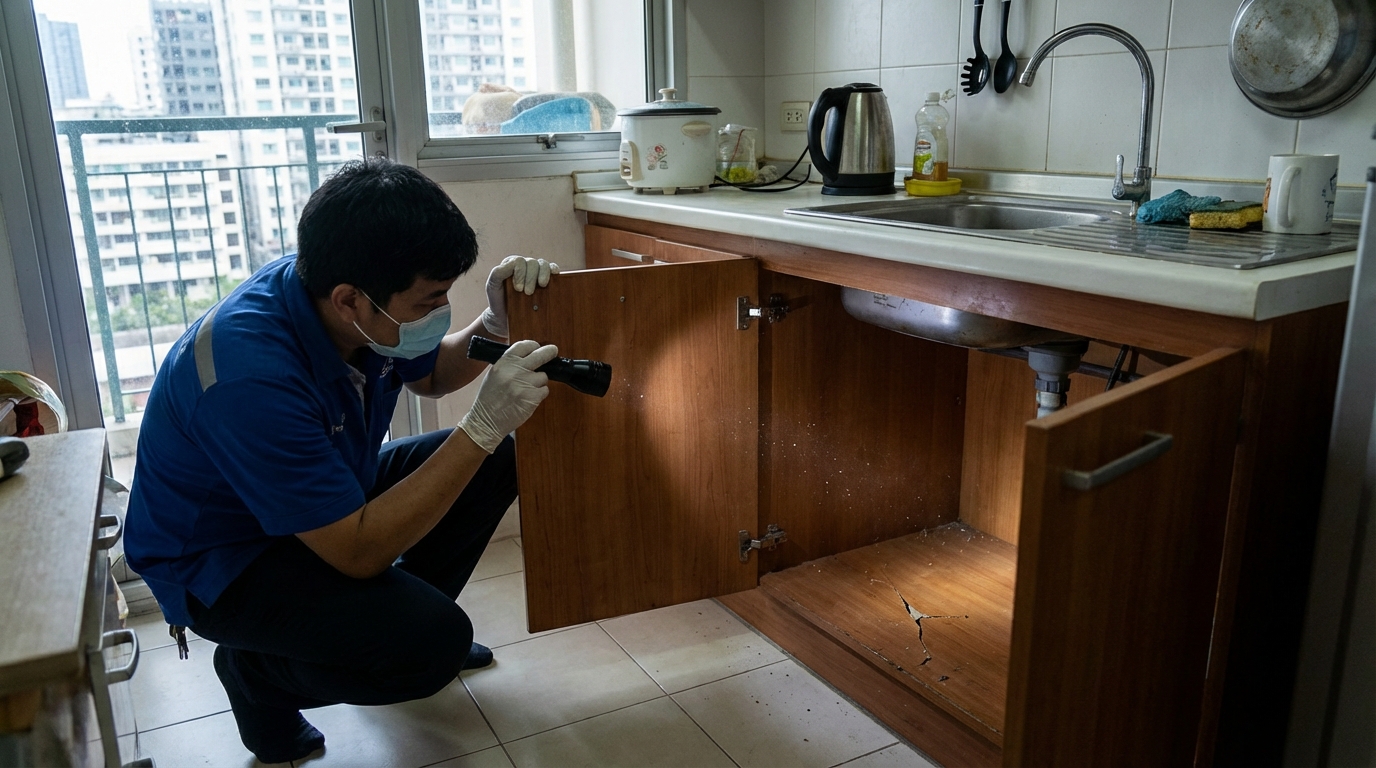
Pest Control History: What to Ask Your Bangkok Landlord
Introduction
Two weeks. That’s how long the ant infestation lasted in one of our founder’s Bangkok condos. Building management kept insisting their “fixes” would solve it. They didn’t. After repeatedly asking for an exterminator and being brushed off, he had to call one himself—at his own expense.
If you’re coming from a temperate climate, you might not realize what Bangkok’s tropical environment means for pest pressure. This isn’t a matter of cleanliness. In a city where humidity regularly exceeds 80% and temperatures rarely drop below 25°C, insects don’t take a seasonal break. They’re active year-round, and buildings that don’t maintain aggressive prevention programs will have problems.
The question isn’t whether pests exist in Bangkok—they do, everywhere. The question is whether your building takes it seriously.
Why Pest Control Matters in Tropical Bangkok
Bangkok’s climate creates ideal conditions for three pest categories that foreigners from temperate countries rarely encounter at this intensity:
Ants: Multiple species thrive in Bangkok’s humidity. Ghost ants, pharaoh ants, and carpenter ants can establish colonies inside walls, under flooring, and in any space with moisture access. They’re not just a nuisance—carpenter ants can cause structural damage over time.
Cockroaches: German and American cockroaches are endemic to Bangkok. They carry bacteria, trigger allergies and asthma, and are notoriously difficult to eliminate once established. A single female German cockroach can produce 30,000 offspring in a year under ideal conditions.
Termites: Subterranean termites are a serious concern in older Bangkok buildings. They can compromise wooden structures, furniture, and flooring without visible signs until damage is severe. Some Bangkok condos have been rendered uninhabitable due to untreated infestations.
Buildings without regular professional pest management will have these issues. The only variable is when you’ll discover them.
Questions to Ask About Building Fumigation
Before signing a lease, ask these specific questions—and pay attention to how the landlord or agent responds:
1. Does the building have a regular fumigation schedule?
Professional buildings contract with pest control companies for monthly or quarterly treatments of common areas, garbage facilities, and building perimeters. Ask for specifics: What company? How often? When was the last treatment?
Vague answers like “when needed” or “if there’s a problem” indicate reactive rather than preventive management.
2. Does the unit receive individual pest treatment?
Building-wide fumigation doesn’t always include individual units. Some landlords arrange unit treatments between tenants; others don’t. Ask whether the unit was treated before your viewing and when it was last professionally serviced.
3. Can you provide pest control records?
Reputable buildings keep documentation. If a landlord can produce records showing consistent treatments, that’s a strong indicator of proactive management. If they can’t locate any records or seem confused by the question, consider what else might be poorly documented.
4. What happens if I report a pest problem?
Clarify the process before you need it. Who do you contact? What’s the typical response time? Does the landlord or building cover treatment costs, or are you expected to handle it yourself?
Signs of Pest Problems During Viewing
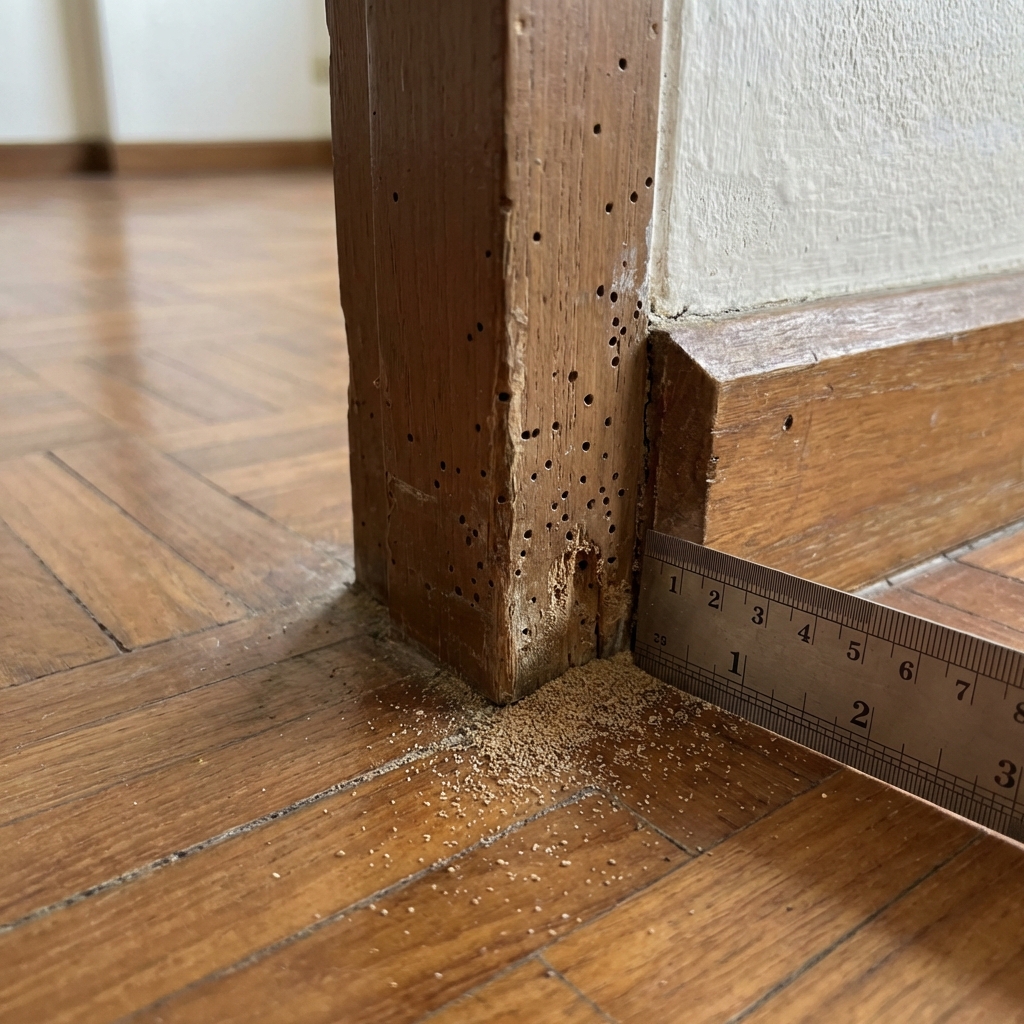
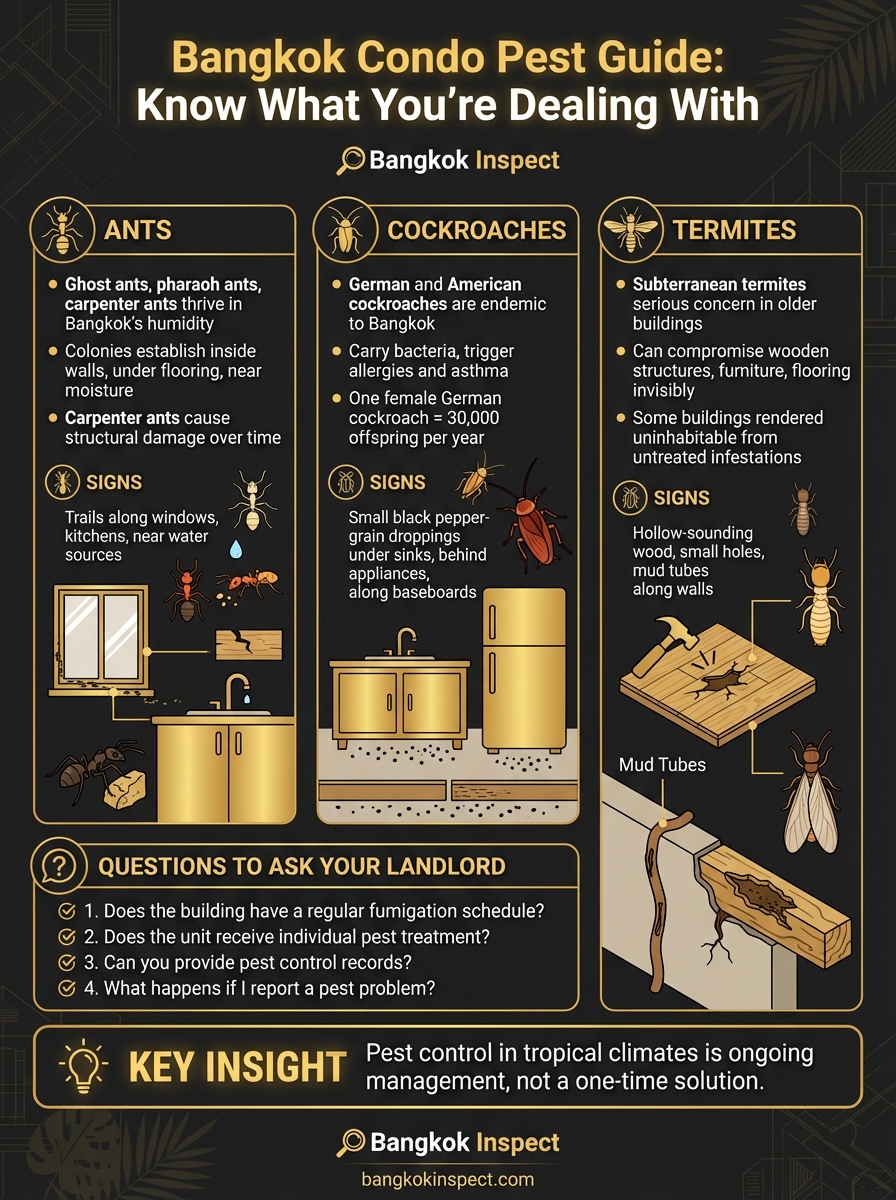
Even if a landlord assures you the unit is “pest-free,” conduct your own visual inspection:
Look for droppings: Cockroach droppings resemble small black pepper grains or coffee grounds. Check under sinks, behind appliances, inside cabinets, and along baseboards.
Check for ant trails: Look along windows, in kitchens, and near any water sources. Even a few ants during a daytime viewing can indicate a larger colony.
Inspect wooden surfaces: Termite damage often shows as hollow-sounding wood, small holes, or lines of mud tubes along walls and foundations.
Notice the smell: Heavy cockroach infestations produce a distinctive musty, oily odor. If a unit smells heavily of air freshener or cleaning products, ask yourself what might be masked.
Check sealed areas: Ask to look inside storage spaces, under bathroom vanities, and behind furniture. These are the areas pests prefer—and the areas sellers hope you won’t inspect.
What “Pest-Free” Claims Really Mean
When a landlord or agent says a unit is “pest-free,” they typically mean one of two things:
- They haven’t personally seen pests recently
- The unit was treated before your viewing
Neither guarantees you won’t have problems. Pest control in tropical climates is ongoing management, not a one-time solution. A unit can be treated today and reinfested within weeks if the building doesn’t maintain prevention.
The meaningful question isn’t “Is this unit pest-free?” It’s “What ongoing pest management protects this building and unit?”
How We Can Help
Our inspectors don’t just look for visible pests—they check for the conditions and signs that indicate current or potential problems. We ask the questions landlords hope you won’t think of, and we document what we find.
Pest control history is one of the specific items on our inspection checklist. If a building can’t demonstrate adequate prevention measures, you’ll know before you sign—not two weeks into an ant infestation.
Ready to know what you’re signing up for?
Book an inspection at bangkokinspect.com or message us on WhatsApp, Telegram, or Messenger. We respond within hours.
Bangkok Inspect provides independent property condition documentation to support your rental process. Our reports are designed to supplement—not replace—the jointly-signed condition report required between tenant and landlord under Thailand’s 2025 residential leasing regulations (for landlords with 3+ units).