The Complete Guide to Renting a Condo in Bangkok as a Foreigner (2026)
You don’t speak Thai. The agent works for the landlord. And you’re about to sign a contract that could cost you two months’ rent if things go sideways.
Renting in Bangkok as a foreigner isn’t impossible. But it’s different enough from what you know that insider knowledge can save you thousands of baht and months of frustration.
This guide covers everything we wish someone had told us before our first Bangkok lease. After 8+ combined years living in Thailand—including ant infestations, deposit disputes, and an Airbnb that didn’t exist—we’ve learned what actually matters.
Bangkok’s 2026 Rental Market: A Tenant’s Advantage
Most expats don’t realize the Bangkok condo market favors tenants right now. Heavily.
The numbers:
- 18-22% vacancy rates in CBD districts like Sukhumvit and Sathorn (Colliers Thailand, January 2025). A healthy market sits around 8-10%. Bangkok is double that.
- 58,000+ unsold condo units in Bangkok alone, with 235,000+ across Greater Bangkok (REIC, Q4 2024), the highest inventory since 2018.
- 10-25% rental discounts are now standard in negotiations, not exceptional.
- 1-2 months free rent is a common landlord concession.
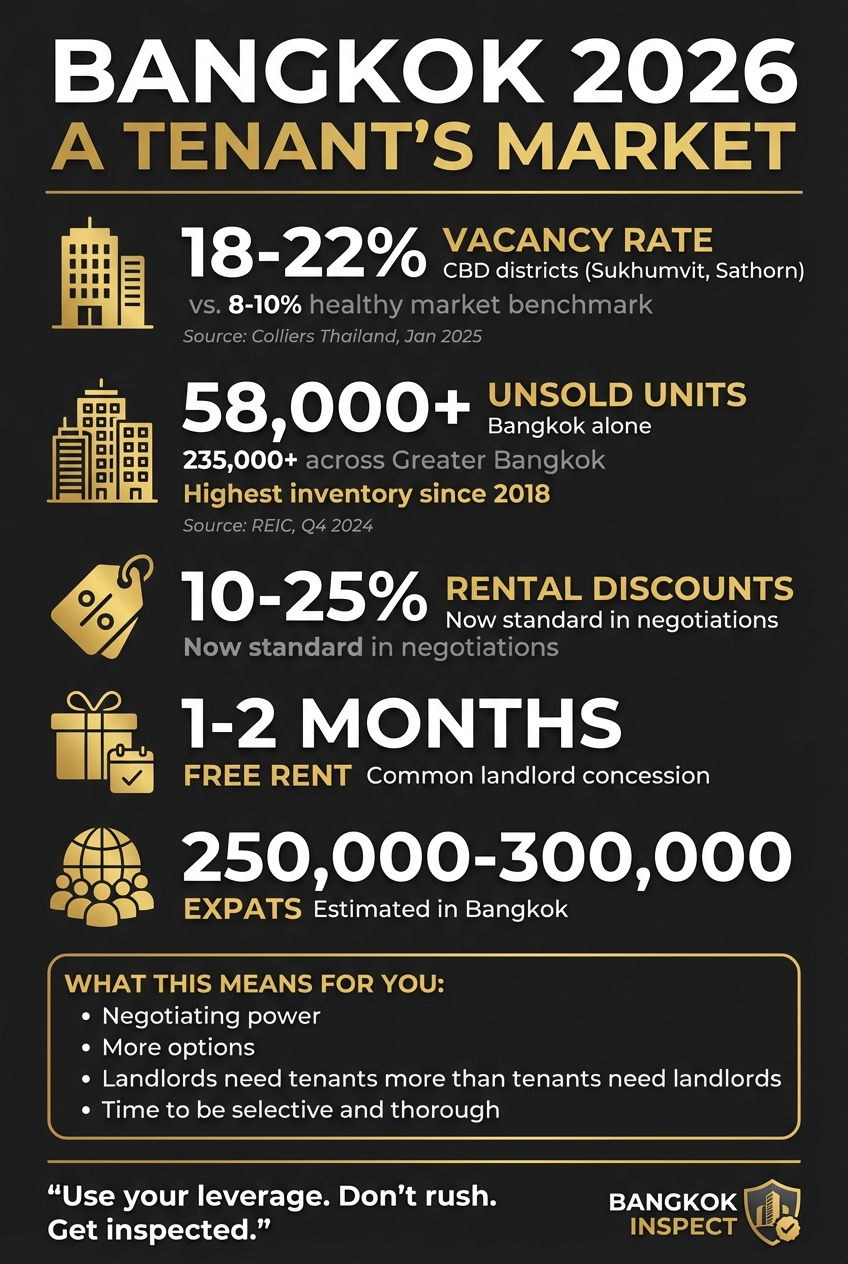
This gives you negotiating power. Landlords need tenants more than tenants need landlords. That overpriced unit on Sukhumvit? The landlord will negotiate if you push back. The deposit terms? More flexible than the listing suggests.
Bangkok has approximately 250,000-300,000 expatriates at any given time, with significant visa-driven population flow creating constant market movement. Whether you’re here on a corporate assignment, an LTR visa, a Destination Thailand Visa (DTV) for remote work, or exploring a longer stay, the market conditions favor tenants who do their homework.
The Bangkok Rental Process: Step by Step
Finding Properties
Most foreigners default to one of these approaches:
Online Platforms:
- DDProperty and Hipflat for direct listings
- Facebook Marketplace and expat groups (often agent-heavy)
- Direct building contact through property websites
Rental Agents: You’ll encounter agents everywhere. They work for landlords, not you. Their commission comes from closing deals, which means their incentive is getting you signed, not pointing out problems.
Some agents are excellent and genuinely helpful. But the structural conflict of interest is real. “One-stop services” that find you a property and then “inspect” it? Be skeptical. Their “inspection” exists to close the deal.
Direct Approach: If you’ve identified a building you like, visit the juristic office (building management) directly. Many buildings have available units listed on-site, and you can bypass agent fees.
The Viewing Process
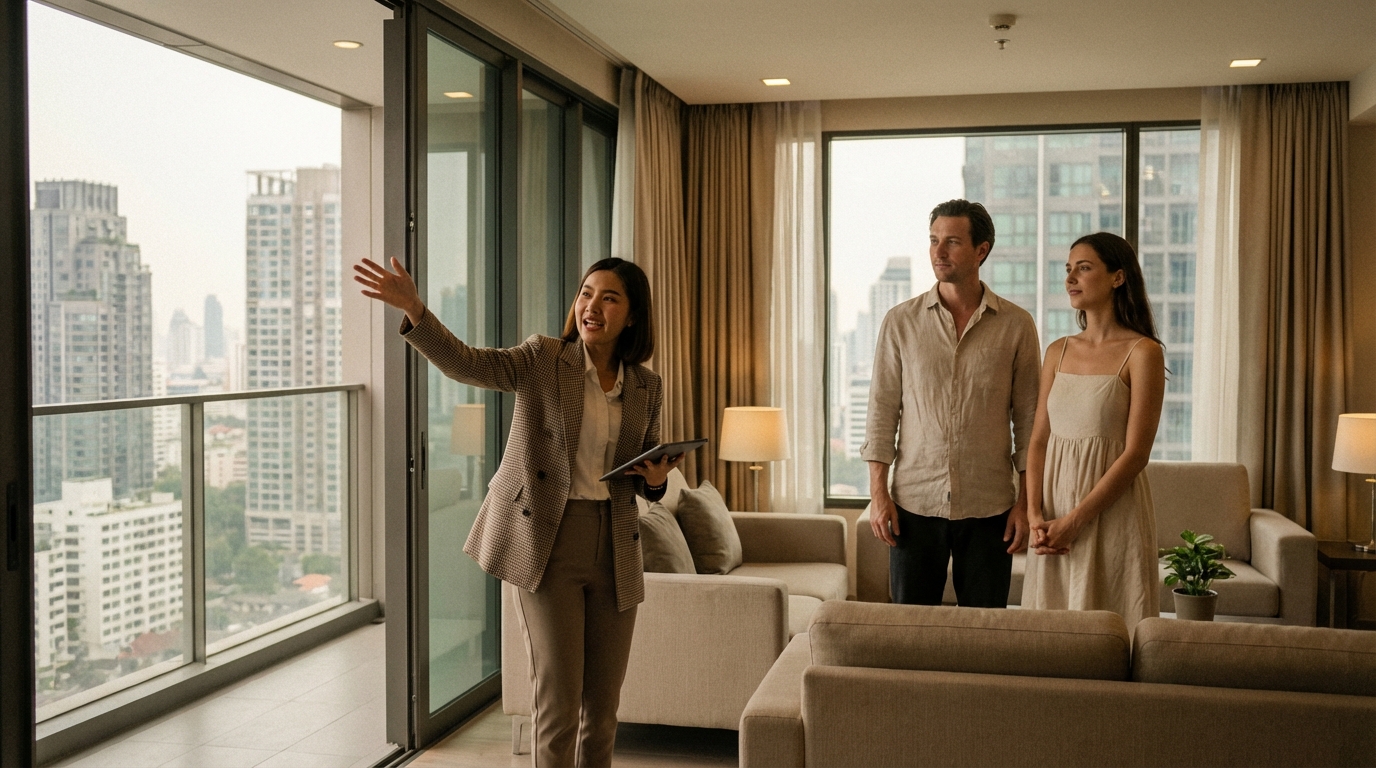
Standard viewings in Thailand follow a predictable script: agent opens the door, you walk through quickly, agent highlights the pool and gym, you take some photos, you leave with a brochure.
What’s missing? Everything that actually matters.
A 15-minute walkthrough won’t reveal:
- Whether the AC actually cools or just runs (and whether it drains properly)
- Water pressure issues that only show up at peak hours
- Mold growing behind furniture or inside closets
- How responsive building management actually is
- Whether the building has current pest control records
- Signs of water damage from previous flooding
We’ll dig into what to actually check later in this guide.
Deposits and Payments
The standard structure in Bangkok:
- Security deposit: 2 months’ rent
- Advance rent: 1 month’s rent
- Total upfront: 3 months’ rent minimum
This is non-negotiable for most landlords, though in today’s tenant’s market, some will accept 1.5 months security deposit for longer lease terms.
Critical: Thailand has no legal deposit protection scheme. Unlike the UK, Australia, or many US states, your deposit sits in your landlord’s personal bank account. No escrow, no regulated holding, no automatic dispute resolution.
This isn’t a scam. It’s a regulatory gap. Documentation is your only real protection when you check out.
Contracts and Legal Considerations
Most lease agreements in Bangkok are bilingual (Thai/English). If there’s any conflict, the Thai version governs legally. If you don’t read Thai, have someone you trust review the Thai text, not just the English translation.
Standard lease terms:
- 12-month minimum (shorter terms exist but often at premium rates)
- 30-60 day notice periods for termination
- Landlord access provisions (ensure reasonable notice requirements)
- Maintenance responsibilities (who handles what)
Thailand’s September 2025 rental regulations introduced new requirements for landlords operating three or more residential units. These include:
- Jointly-signed condition reports at move-in
- Standardized contract terms under OCPB (Office of the Consumer Protection Board) oversight
- Documentation requirements for unit condition
Even if your specific landlord isn’t covered (single-unit owners are exempt), the regulation establishes a documentation standard worth following for your own protection.
What Standard Viewings Miss
After years of Thailand rental experiences, we’ve learned what to check. Standard viewings rarely cover any of it.
Air Conditioning
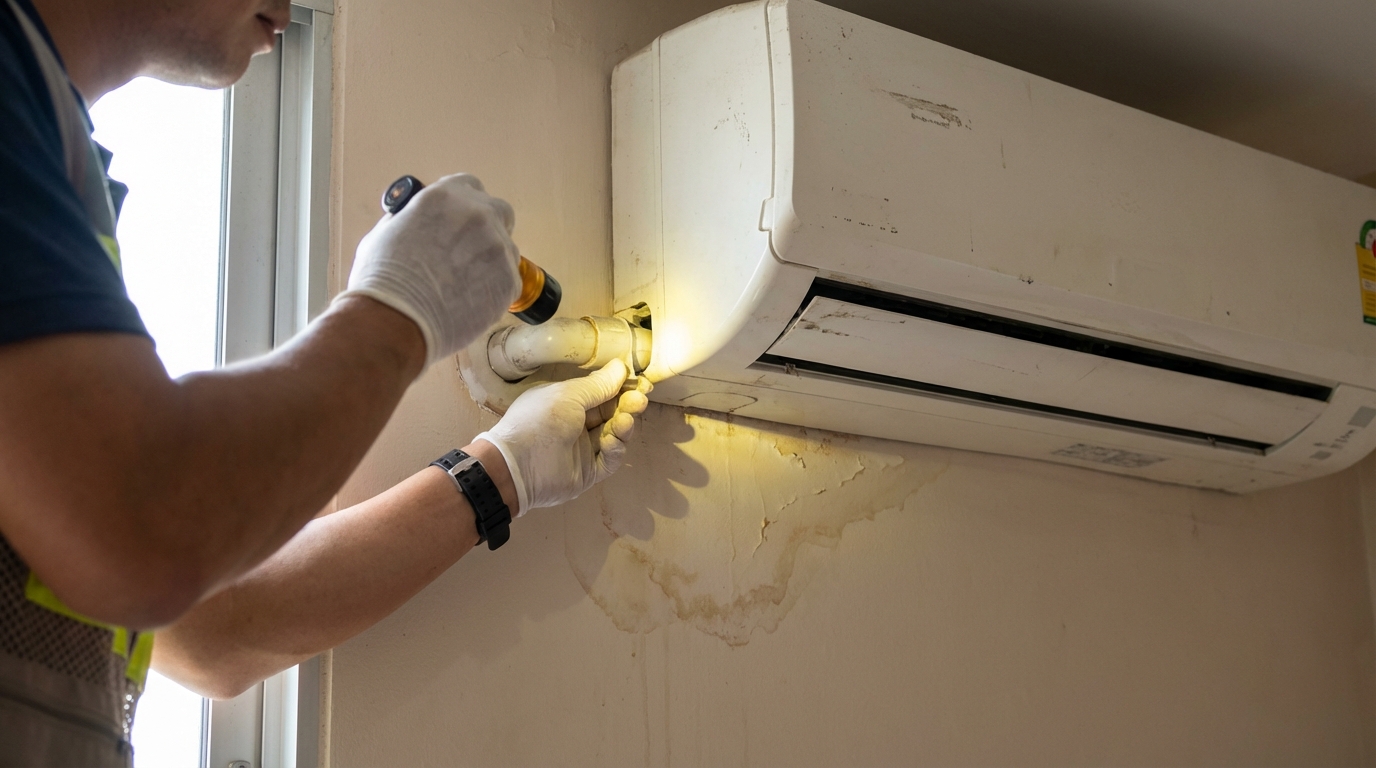
In Bangkok’s humidity (70-80% average, exceeding 80% during rainy season), a malfunctioning AC doesn’t just mean discomfort. It means mold within weeks.
What to check:
- Does the AC cool effectively, or does it run constantly without reaching temperature?
- Is there proper drainage? A blocked drain leads to water damage and mold.
- When was the last service? AC units in tropical climates need cleaning every 3-6 months.
- Check behind and around the indoor unit for water stains or discoloration.
Water Systems
Pressure and flow:
- Run multiple taps simultaneously. Does pressure drop significantly?
- Check shower water pressure. Many buildings have weak flow on upper floors.
- Flush the toilet while running the sink. Any issues?
Drainage:
- Fill sinks and tubs, then drain. Does water flow freely or back up?
- Check under sinks for signs of leaks or water damage.
Hot water:
- Test the water heater. How long until hot water arrives?
- Is it a tankless heater (common in condos) or a storage tank?
Mold and Humidity Damage
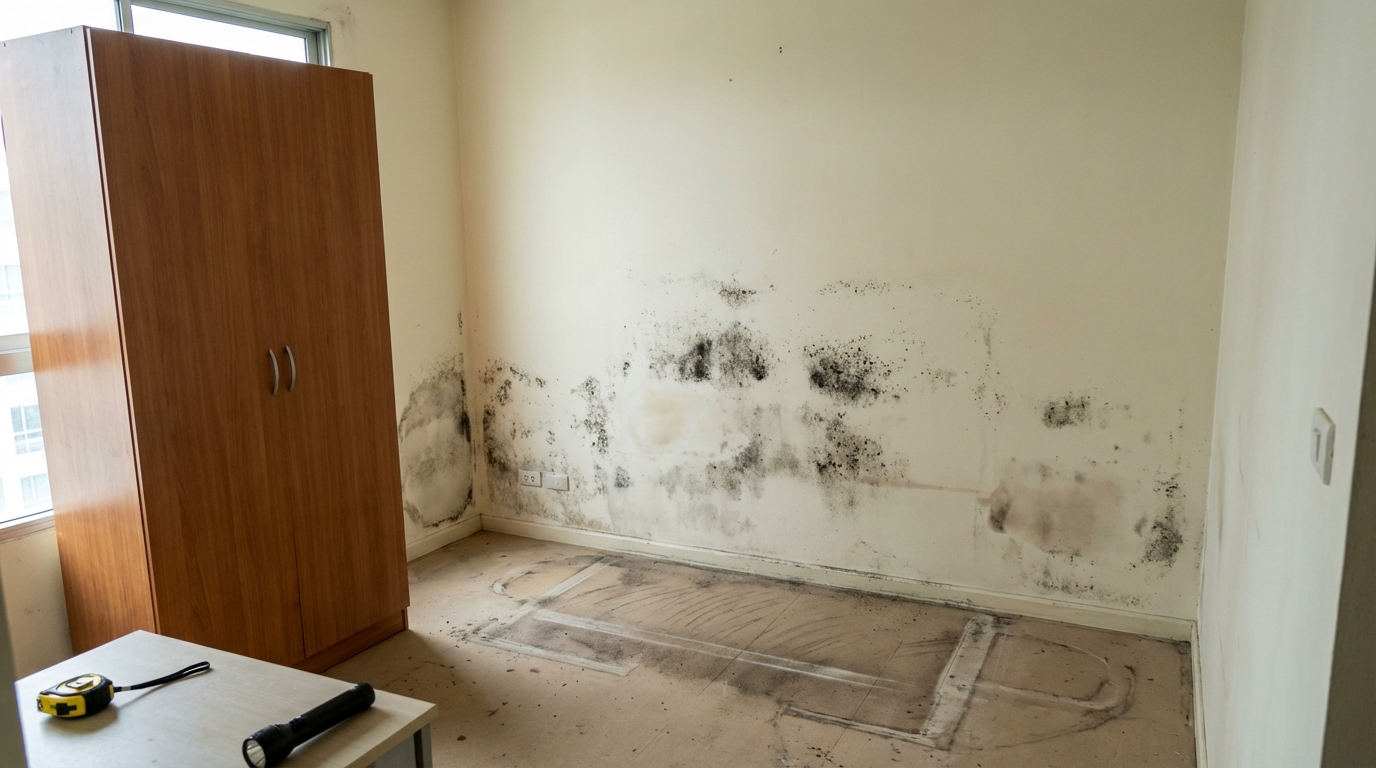
Bangkok’s climate is unforgiving to buildings. Mold grows fast and hides well.
Where to look:
- Behind and under furniture (if possible to move)
- Inside closets and cabinets, especially corners
- Around windows and door frames
- Bathroom ceilings and exhaust fan areas
- Under sinks and around plumbing
Signs to watch for:
- Musty smell (even faint)
- Discoloration on walls or ceilings
- Bubbling or peeling paint
- Warped flooring or baseboards
Pest Control Records
One of our founders spent two weeks battling an ant infestation. Building management kept insisting their “fixes” would work. They didn’t. He ended up hiring his own exterminator.
What to ask:
- When was the building last fumigated?
- What’s the pest control schedule?
- Have there been recent complaints about pests in the building?
Building management often has this information but won’t volunteer it. Ask directly.
Building Management Responsiveness
The biggest quality-of-life factor in a Bangkok condo isn’t the unit itself. It’s how responsive building management is when things go wrong.
Indicators:
- How quickly did they respond to your viewing request?
- Walk around common areas. Are they well-maintained or showing wear?
- Check notice boards for recent maintenance updates.
- Ask other residents (casually) about their experience.
Security Deposit Realities
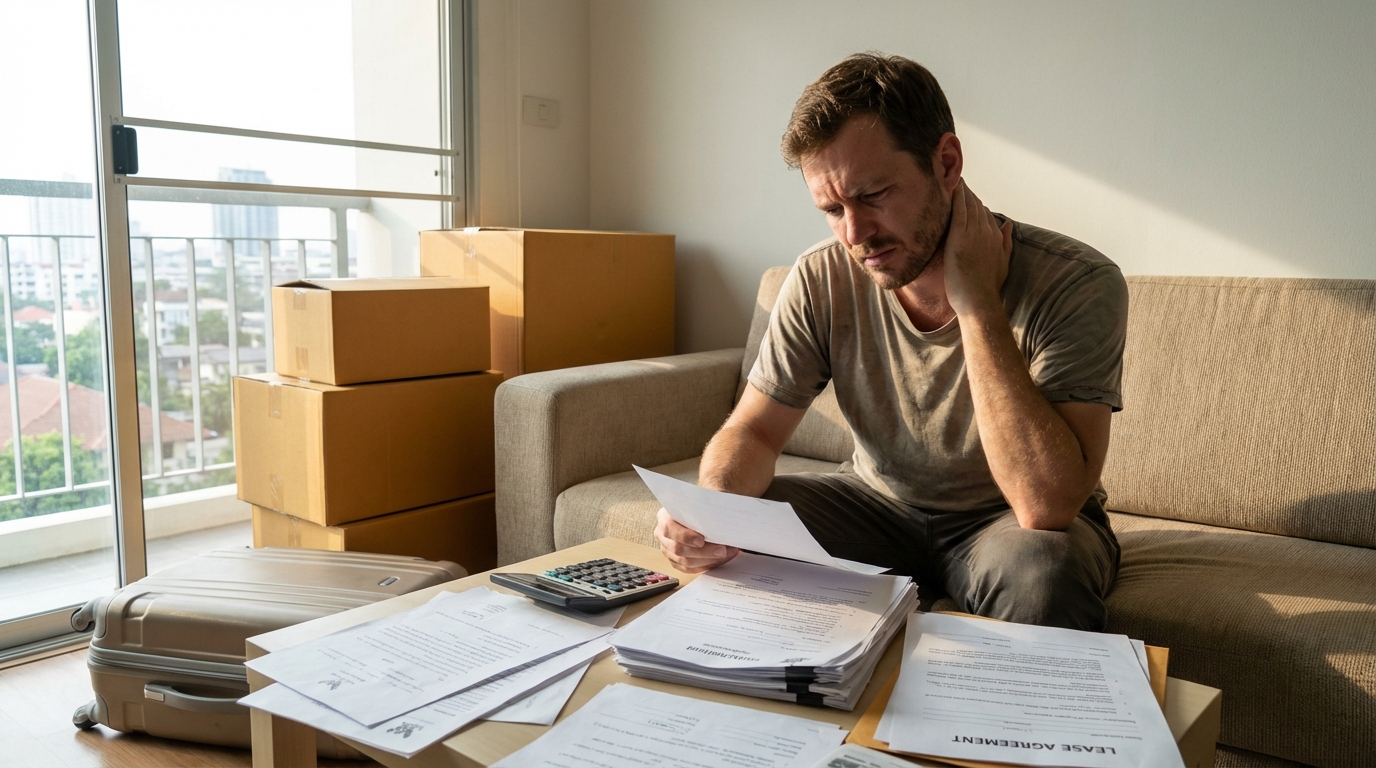
Security deposit disputes are the largest source of rental conflicts in Thailand, according to Thai legal sources.
Why?
- No legal deposit protection scheme
- Subjective “wear and tear” assessments at check-out
- Language barriers during dispute resolution
- Cost and complexity of legal recourse
Your protection: documentation.
At move-in:
- Photograph every room, wall, fixture, and appliance
- Document all existing damage, no matter how minor
- Video walkthrough with timestamp
- Get written acknowledgment of pre-existing issues
- Ensure condition report is jointly signed by you and the landlord
At move-out:
- Repeat the full documentation process
- Be present for the inspection
- Get written itemization of any claimed damages
- Compare to your move-in documentation
The September 2025 regulations requiring jointly-signed condition reports formalized what should have always been standard practice. Use this framework whether your landlord is technically required to or not.
Climate-Specific Concerns
Foreigners from temperate climates consistently underestimate Bangkok’s humidity impact on housing.
Mold Prevention
In a poorly ventilated Bangkok bathroom, visible mold can appear within 2-3 weeks of a water issue.
Risk factors:
- AC drainage problems
- Bathroom exhaust fan failures
- Poor ventilation in closets
- Ground-floor units with inadequate moisture barriers
Before signing:
- Run the bathroom exhaust fan. Does it actually pull air?
- Check AC drainage paths and look for water staining.
- Assess airflow. Can cross-ventilation actually work?
Flooding Considerations
Bangkok floods. It’s not a question of if, but when and how bad.
Before renting:
- Research the specific soi (street) history. Some areas flood annually; others rarely.
- Ask building management about flood history and drainage systems.
- Check ground-floor units carefully for past water damage.
- Understand the building’s emergency protocols.
Earthquake Safety Considerations
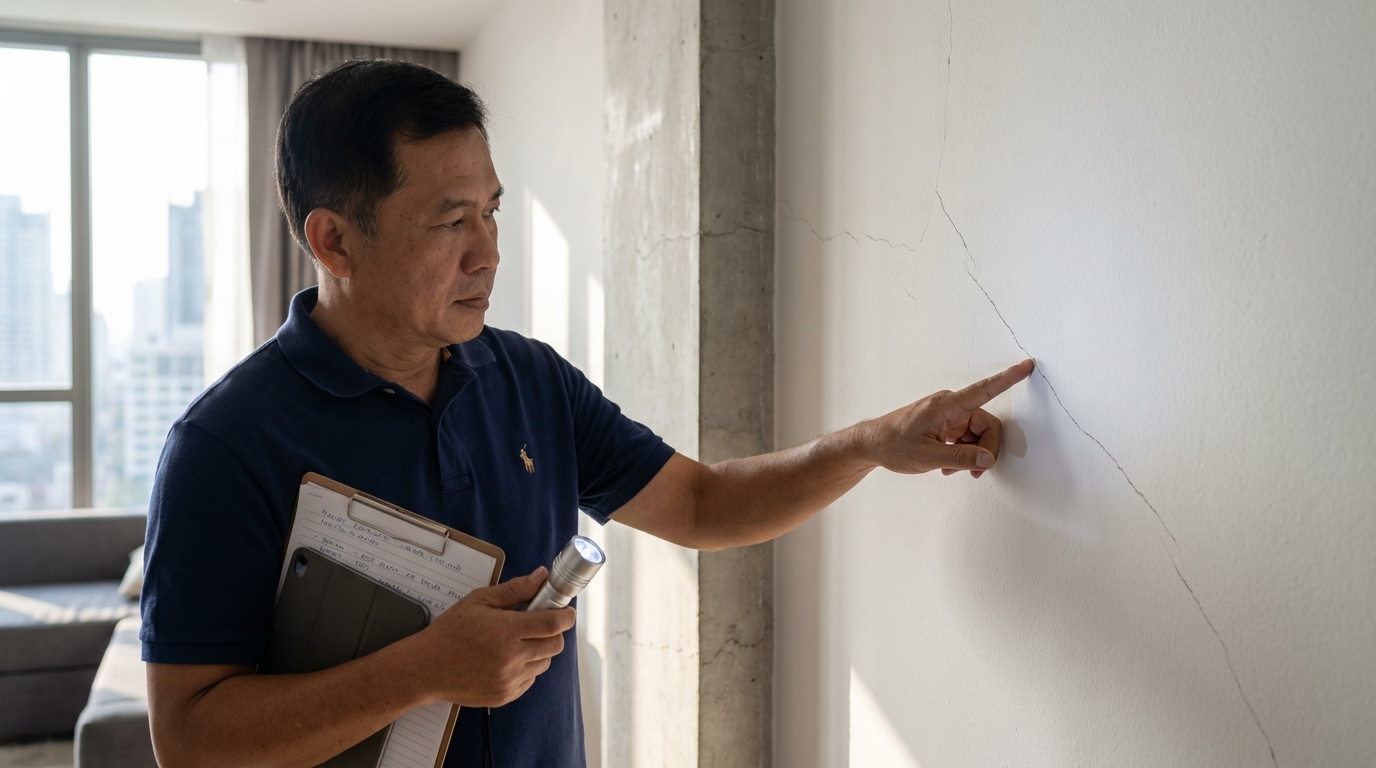
The March 2025 Myanmar earthquake (magnitude 7.7) changed how many Bangkok residents (expat and Thai alike) think about building safety. While Bangkok wasn’t directly hit, tremors were felt across the city, with over 14,000 reports of building cracks and one construction site collapse (95 fatalities).
The Bangkok Metropolitan Administration responded by requesting safety assessments from over 11,000 building owners.
What to check:
- Has the building completed its post-earthquake safety assessment?
- Are there any visible cracks in walls, especially around structural elements?
- What year was the building constructed? (Post-2004 buildings have stronger seismic codes)
- Is the building’s inspection status documented?
Building management should be able to confirm whether structural assessment has been completed. If they can’t answer, that’s a data point.
Red Flags and Practical Tips
Red Flags
Walk away or negotiate hard if you see:
- Reluctance to provide pest control or maintenance records
- Visible mold or water damage (indicates ongoing issues)
- Inconsistent or evasive answers from building management
- Pressure to sign quickly without time for due diligence
- Agent or landlord who won’t allow independent inspection
- Building with no post-earthquake safety assessment completed
Practical Tips
Negotiation advantage:
- Ask about other available units in the building (more vacancies = more advantage)
- Reference comparable listings at lower prices
- Request 1-2 months free rent for 12-month+ leases
- Negotiate furniture upgrades or appliance replacement
- Ask for reduced deposit for longer commitment
Documentation habits:
- Create a dedicated folder (cloud-synced) for your rental documents
- Photograph every communication in writing
- Keep all receipts for any repairs or purchases
- Save chat histories with landlord/management
Language barrier management:
- Get all agreements in writing, not just verbal
- Use professional translation for anything you don’t understand
- Build relationship with building staff. It pays dividends during problems
- Have a Thai-speaking contact who can make calls when needed
How Professional Inspections Fit In
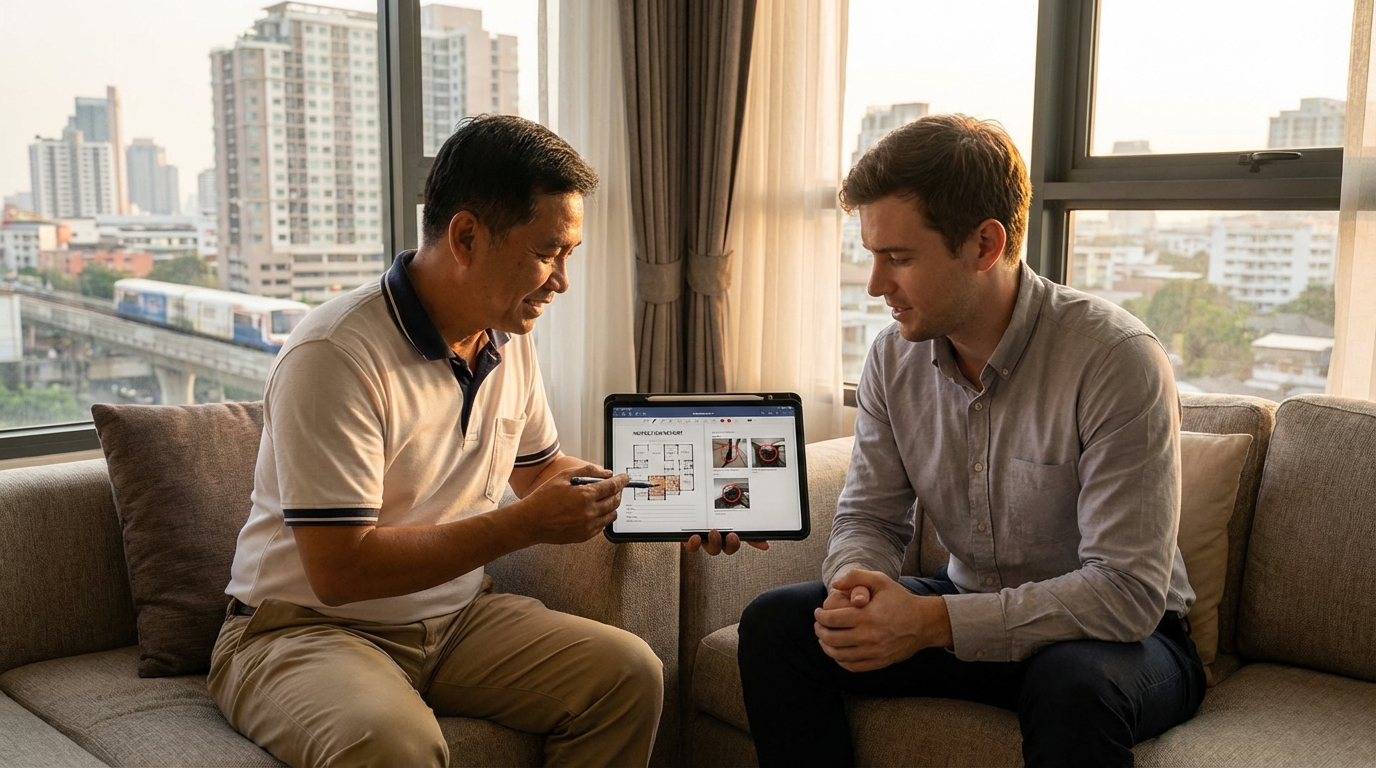
We run an inspection service. So we’re not neutral on this question. But we can be honest about where independent inspections add value and where they don’t.
Where inspections matter most:
-
Higher-value units (฿35,000+/month): A professional inspection is US$499 / THB 15,900 for condos up to 120 sqm. For larger units, pricing is quoted individually after a quick size and scope review.
-
Corporate relocations: When your employer is paying and you’re moving a family, the cost is trivial compared to the risk of a bad unit.
-
Long-term commitments: A 1-year or multi-year lease makes the stakes high enough that pre-sign documentation matters.
-
Language barrier situations: Our inspectors are Thai property owners who speak fluent English. They can ask building management the questions you can’t, and understand the answers.
What inspections provide:
- Comprehensive documentation meeting Thailand’s 2025 move-in standards
- Professional photo evidence of every defect and concern
- Bilingual PDF report you can share with landlords for negotiation
- English report delivery within two business days because Bangkok properties move fast
- Third-party documentation from someone who doesn’t work for the landlord
Most property services in Thailand work for landlords. Rental agencies make money when you sign. We don’t take referral fees from landlords or agencies. If we find issues that make you walk away, we’ve done our job.
Your Next Step
Finding a good condo in Bangkok isn’t complicated. But protecting yourself requires knowing what to check, what to document, and what questions to ask.
We’ve distilled everything from this guide into a practical, printable checklist you can take to your next viewing.
Download the free Bangkok Rental Checklist:
Get our 2-page checklist covering:
- 40+ specific items to inspect during viewings
- Questions to ask building management
- Documentation checklist for move-in
- Red flags that signal problems
- Negotiation talking points for today’s market
No spam. Just the checklist delivered to your inbox.
Bangkok Inspect provides independent property condition documentation to support your rental process. Our reports are designed to supplement (not replace) the jointly-signed condition report required between tenant and landlord under Thailand’s 2025 residential leasing regulations (for landlords with 3+ units). Bangkok Inspect is not a licensed property surveyor or legal advisor. For legal matters, consult a qualified Thai attorney. Regulations may change; verify current requirements with the Office of the Consumer Protection Board (OCPB).
Questions about renting in Bangkok? Reach us via WhatsApp, Telegram, or Messenger.