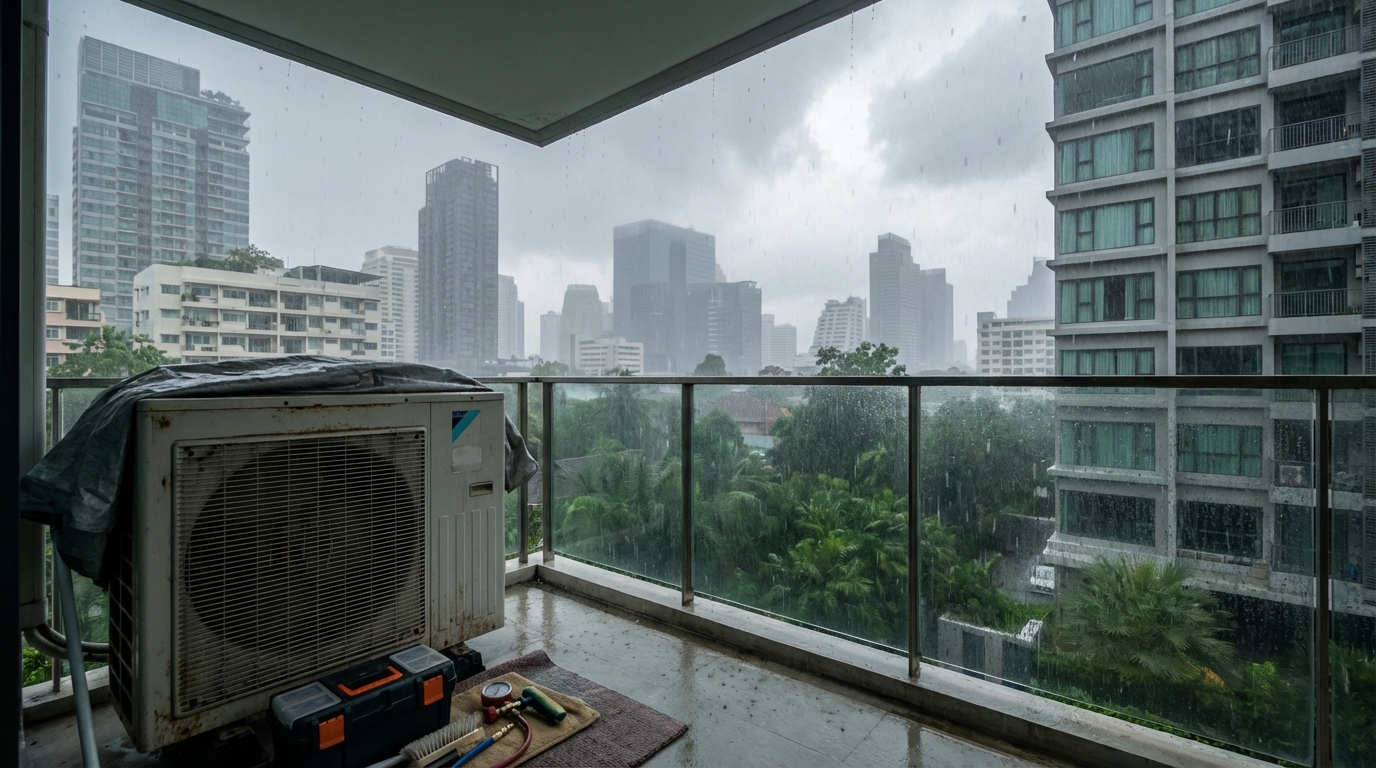
Tropical Climate Maintenance for Bangkok Properties
You own a condo in Bangkok. The AC worked fine when you last checked. The unit looked clean during the last tenant turnover. You assume everything is fine. Then monsoon season hits, or you visit after three months away, and discover mold on walls, a broken AC compressor, water damage from a leak you didn’t know existed, and repair bills that eat months of rental income.
Bangkok’s tropical climate is harder on property than most landlords realize. High humidity, intense heat, heavy monsoons, and year-round moisture create maintenance challenges that don’t exist in temperate climates. Without proactive maintenance, these conditions will damage your property and cost you money.
Here’s what you need to know.
The Humidity Problem: Why Bangkok Properties Deteriorate Faster
Bangkok’s average humidity ranges from 65% to 85% year-round. During monsoon season, it hits 90%. This constant moisture accelerates wear on everything from paint to electronics.
High humidity causes mold and mildew on walls, ceilings, bathrooms, and closets - anywhere air doesn’t circulate well. Paint peels, bubbles, and discolors, especially on exterior-facing walls. Wood warps and swells in door frames, cabinets, and furniture. Electrical outlets and switches corrode. Curtains, mattresses, and sofas develop mildew. Metal fixtures, hinges, and balcony railings rust.
Unlike temperate climates where buildings dry out seasonally, Bangkok properties stay damp year-round. If you don’t manage humidity actively, it will damage your unit.
AC Systems: Your First Line of Defense (and Your Biggest Liability)
Air conditioning in Bangkok isn’t a luxury. It’s your primary humidity control. If your AC isn’t working properly, your entire unit is at risk.
AC removes humidity from the air, which reduces mold and damage. It keeps tenants happy - malfunctioning AC is their most common complaint. Proper maintenance prevents expensive compressor failure and maintains property value.
Bangkok’s heat and humidity put constant stress on AC systems. Without regular maintenance, filters clog and reduce efficiency while raising electricity bills and degrading air quality. Coils collect dust and mold, which reduces cooling and creates bad odors. Drainage lines block, causing water to back up and leak into walls or ceilings. Compressors fail, requiring expensive replacement (฿15,000-฿30,000+ per unit).
Mandatory maintenance schedule:
- Monthly (tenant responsibility): Clean filters or have building service do it.
- Every 3-6 months: Professional cleaning (coils, drainage, full service).
- Annually: Full inspection and refrigerant check.
If you include AC maintenance in your lease agreement, specify who’s responsible for monthly filter cleaning (usually tenant) and professional servicing (usually landlord).
What professional AC service should include:
- Filter cleaning or replacement
- Coil cleaning (both indoor and outdoor units)
- Drainage line flushing
- Refrigerant level check
- Electrical connection inspection
- Compressor functionality test
Cost: around ฿800-฿1,500 per unit for basic service. This is cheap compared to compressor replacement.
Monsoon Season Preparation (May to October)
Bangkok’s monsoon season brings heavy rain, occasional flooding, and extreme humidity spikes. If your property isn’t prepared, you’ll deal with water damage and mold.
Before monsoon season starts:
Check drainage. Balcony drains and bathroom drains need to be clear. Blocked drains cause water backup and leaks into lower units or interior walls. Test balcony drainage by pouring water and watching how quickly it clears. If it’s slow, call building maintenance or clear it yourself.
Inspect seals and weatherstripping. Windows and balcony doors need intact seals to prevent rainwater intrusion. Check for gaps, cracks, or deteriorated rubber seals. If water gets in during heavy rain, it will damage floors and walls and create mold behind baseboards or under flooring.
Test for leaks. Check under sinks, around toilets, behind washing machines, and anywhere plumbing connections exist. A slow leak you don’t notice becomes a major mold problem during monsoon season.
Clear gutters if you own a house or townhouse. Clogged gutters cause water to overflow and damage walls, foundations, and landscaping.
Check roof waterproofing if you own a house. Inspect the roof for cracks, damaged tiles, or compromised waterproofing. Roof leaks during monsoon season can destroy ceilings and interiors.
During monsoon season:
- Visit the property after heavy rain to check for leaks
- Ensure AC is running regularly to control humidity
- Monitor for mold growth (especially in bathrooms and closets)
Mold Prevention and Control
Mold is the most common problem in Bangkok rental properties. It grows fast, spreads easily, and tenants hate it.
Mold grows in bathrooms (tiles, grout, ceilings, behind toilets), closets (especially if doors are kept closed and AC doesn’t reach inside), walls near windows or AC units where condensation builds up, behind furniture pushed against exterior walls, and under sinks or around plumbing leaks.
To prevent it: Run AC regularly. Even vacant units need AC running periodically to prevent humidity buildup. If a unit sits empty for weeks without AC, mold will appear.
Make sure ventilation works. Bathrooms need exhaust fans that actually work. Many Bangkok condos have non-functional bathroom fans. Check this during turnovers.
Fix leaks immediately. Any water leak creates mold within 24-48 hours in Bangkok’s humidity. Don’t delay repairs.
Keep furniture away from walls. Furniture pushed against exterior walls traps moisture and creates mold. Leave at least 5-10cm of space for air circulation.
Use dehumidifiers in problem areas. For units with persistent mold issues, small dehumidifiers in closets or bathrooms can help.
Small mold patches can be cleaned with white vinegar and water, bleach solution (1 part bleach to 10 parts water), or commercial mold removers. Scrub affected areas, rinse, and dry thoroughly. For extensive mold, hire professional cleaning services.
If mold keeps returning after cleaning, you have a moisture source you haven’t addressed. Check for hidden leaks, poor ventilation, AC drainage issues, or building envelope problems where water gets in through walls or windows.
Plumbing: What to Check Year-Round
Bangkok’s water pressure, aging infrastructure, and constant use stress plumbing systems.
Common problems: Low water pressure, often caused by clogged aerators or building-level supply issues. Slow drains from hair, soap buildup, and grease accumulation. Running toilets with faulty flappers that waste water and increase utility bills. Leaking fixtures at faucets, showerheads, and toilet connections. Hot water heater problems from sediment buildup, electrical issues, or broken heating elements.
Check all faucets, toilets, and visible pipes for leaks every six months. Flush the hot water heater annually to remove sediment. Clear slow drains before they become blockages.
Make sure your lease agreement requires tenants to report plumbing issues right away. A small leak becomes major water damage if ignored for weeks.
Painting and Surface Maintenance
Bangkok’s humidity destroys paint faster than dry climates. Repaint interior walls every 3-5 years, or between long-term tenants. Exterior balcony walls need repainting every 2-3 years because they’re more exposed to weather. Bathrooms and kitchens need more frequent repainting due to moisture and cooking grease.
Repaint when you see peeling or bubbling paint, mold stains that won’t clean off, discoloration or yellowing, or visible water damage marks.
Standard paint isn’t enough in Bangkok. Use paint specifically formulated to resist mold and humidity. It costs slightly more but lasts longer and reduces mold growth.
Pest Control: Year-Round Battle
Bangkok’s tropical climate supports insects and pests year-round. Ants, cockroaches, mosquitoes, geckos, and occasional rats are facts of life.
Most Bangkok condos fumigate quarterly or biannually. Verify your building does this. Treat individual units between tenants or if tenants report problems. Seal gaps around pipes, windows, and doors where pests enter. Ensure tenants aren’t leaving food waste that attracts pests.
Specify in your lease whether pest control is landlord or tenant responsibility. For furnished units, landlords usually handle it. For unfurnished, tenants often handle minor pest issues themselves.
Flooring: Protecting Against Moisture Damage
Bangkok’s humidity affects different flooring types differently.
Tile is most common in Bangkok condos. It’s durable and moisture-resistant, though grout can crack or mildew. Check for loose tiles - water gets underneath and causes more damage.
Wood or laminate is more vulnerable to humidity. It can warp, swell, or separate. It requires AC to stay stable and isn’t ideal for Bangkok unless it’s high-quality and well-maintained.
Vinyl or LVT is moisture-resistant and affordable. It’s a good choice for Bangkok and easier to replace than tile.
Check for cracks or damage during turnovers. Seal grout in bathrooms and kitchens. Replace damaged tiles before water gets underneath.
Windows and Balcony Doors: Seals and Functionality
Windows and balcony doors take constant abuse from sun, rain, and humidity.
Check that seals and weatherstripping are intact with no gaps. Make sure locks and mechanisms operate smoothly. Look for cracks or chips in glass that compromise seals. Check frames for corrosion or deterioration.
Seals deteriorate from UV exposure and heat. Locks corrode from humidity. Sliding mechanisms get stiff or jam.
Replace worn seals immediately. Water intrusion during monsoon season causes expensive damage.
The Vacant Unit Problem
Vacant units deteriorate faster in Bangkok than occupied ones. Without regular AC use and monitoring, humidity damage accelerates.
If your unit is vacant, run AC for several hours every few days (or use a timer). Visit monthly to check for leaks, mold, or pest issues. Keep curtains closed to reduce UV damage to floors and furniture. Consider a dehumidifier if the unit will be vacant for extended periods.
Vacant units that sit for months without AC develop mold, odors, and damage that costs more to fix than the electricity to run AC periodically.
What to Inspect Between Tenants
Every tenant turnover is an opportunity to catch maintenance issues before they become expensive.
Turnover inspection checklist:
- AC functionality and cleanliness
- Mold in bathrooms, closets, walls
- Plumbing leaks or slow drains
- Paint condition
- Flooring damage
- Window and door seals
- Appliance condition (if furnished)
- Pest evidence
- Building fixtures (smoke detectors, light fixtures)
Address issues immediately. Don’t rent the unit out with deferred maintenance. Tenants will complain, and the problems will worsen.
Annual Deep Maintenance
Beyond routine maintenance, schedule annual deep inspections that include full AC professional service for all units, plumbing inspection to check for hidden leaks, electrical safety checks of outlets, wiring, and circuit breakers, structural inspection for cracks, water damage, and building envelope issues, appliance servicing if furnished, and deep cleaning including areas tenants don’t typically access.
Annual deep maintenance catches small problems before they become major repairs.
The Bottom Line for Bangkok Landlords
Bangkok’s tropical climate is harder on property than most landlords anticipate. High humidity, monsoon rains, constant heat, and year-round moisture create maintenance demands that don’t exist in temperate climates.
Proactive maintenance prevents most problems. Reactive maintenance costs far more fixing damage that could have been avoided.
Run AC regularly. Service it properly. Prepare for monsoon season. Control mold. Fix leaks immediately. Inspect between tenants. Preventive maintenance is cheaper than emergency repairs.
Bangkok Inspect provides independent property condition inspections for Bangkok landlords who want to identify maintenance issues before they become expensive problems. Our inspections cover AC systems, plumbing, mold, structural condition, and tropical climate damage. Bangkok Inspect is not a licensed contractor or engineer. For repairs, consult qualified service providers.
Need a professional inspection to assess your property’s condition?
Contact us via WhatsApp | Telegram | Email
Or visit bangkokinspect.com to learn more about our landlord inspection services.